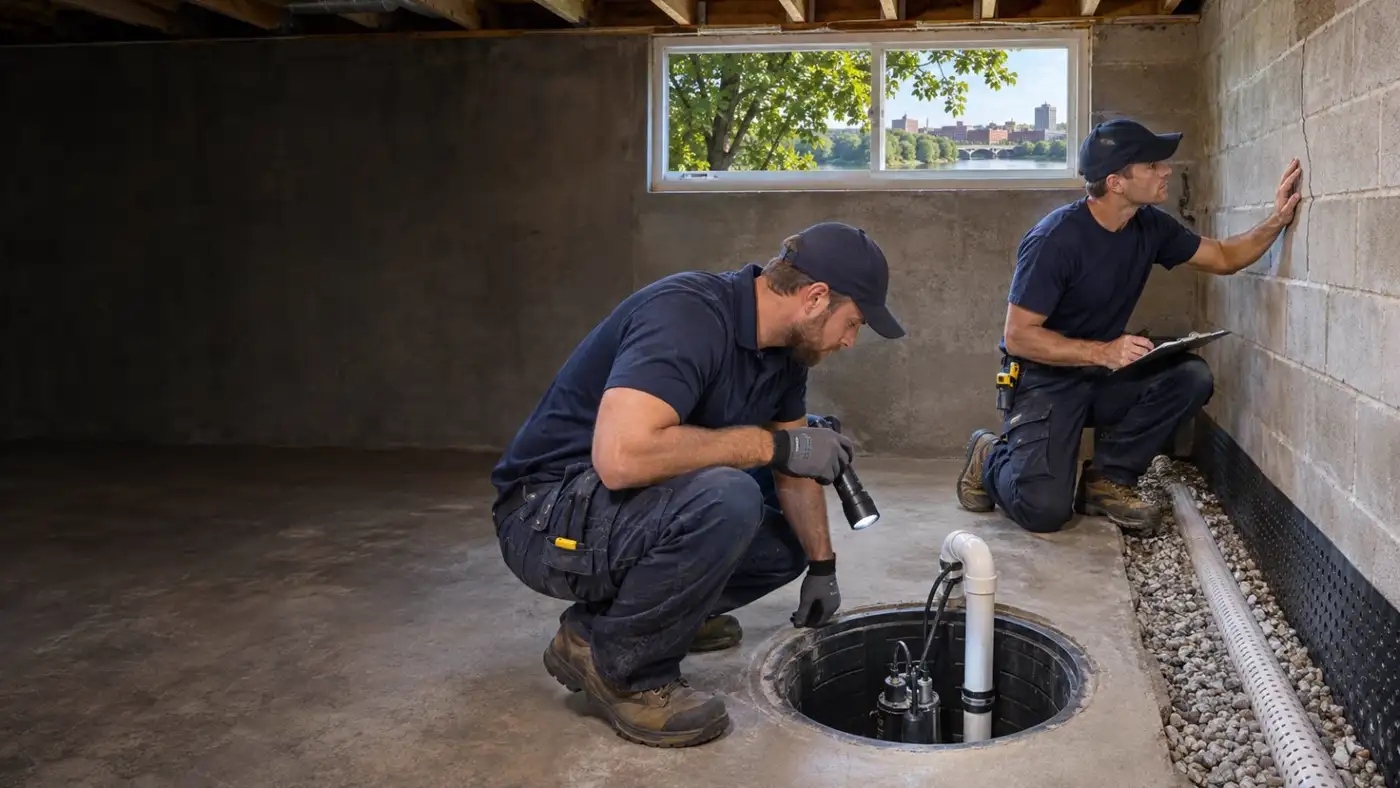
Foundation Wall Stabilization
Bowing Wall Repair and Wall Anchors in Eau Claire
Have a bowing or cracked wall looked at.
A basement wall that bows inward, leans at the top or shows a long horizontal crack is being pushed by the soil outside. Left alone, that movement can slowly get worse. In Eau Claire, frost and wet soil are the usual causes, and block walls tend to show it first.
We measure how far the wall has moved and look for what is pushing it. Then we explain the options, from wall anchors and steel braces to carbon fiber, and when a wall may need to be dug out and rebuilt instead.
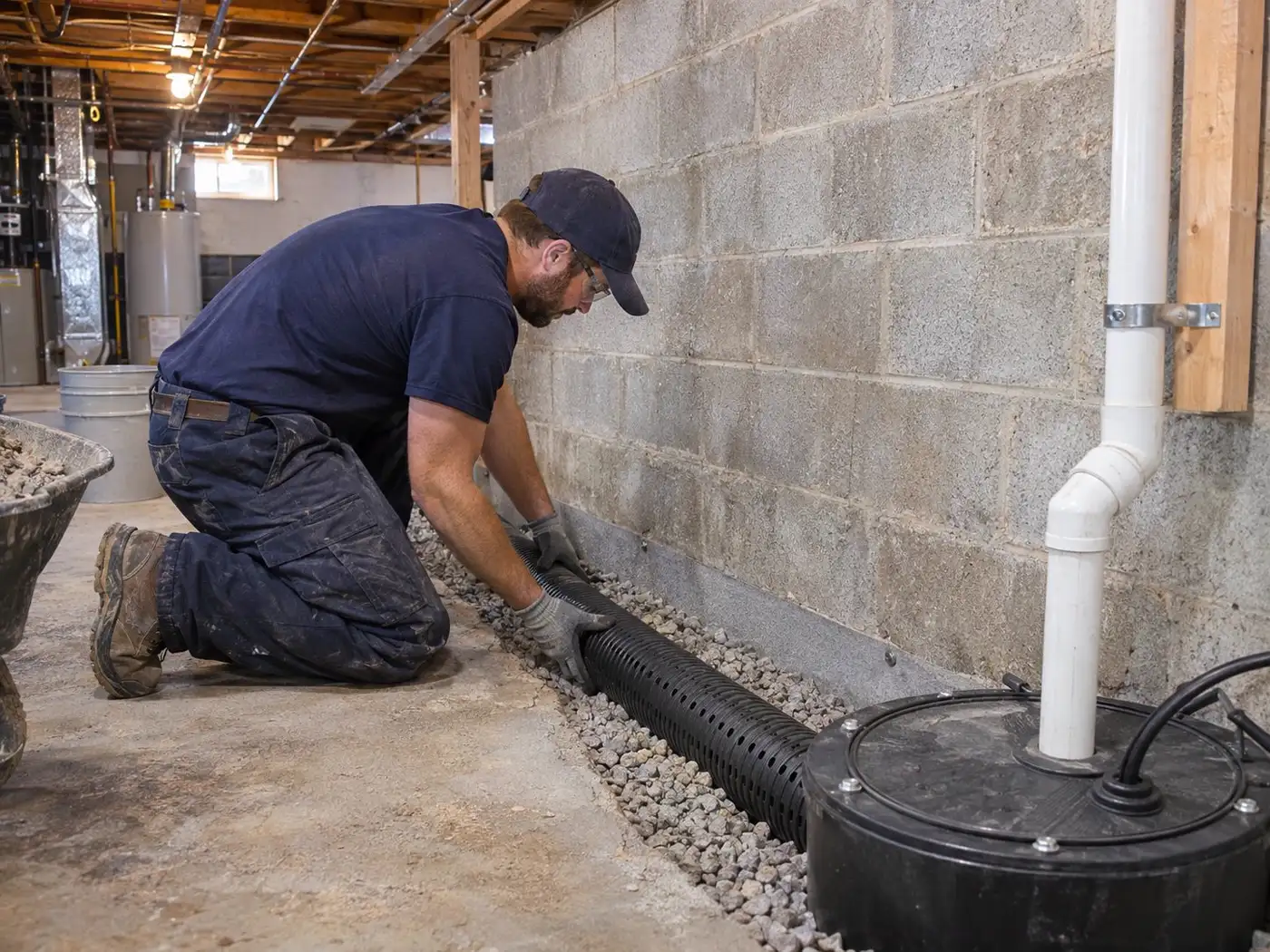
Wall anchors tie the wall to stable soil out in the yard with steel rods and plates. They can hold a bowing wall in place and, in some cases, be tightened over time to bring it back slightly. They need clear yard space and enough room to dig small access holes outside.
Steel braces stand vertically against the inside of the wall and connect to the floor framing above and the floor or footing below. They work where outside space is tight. They take up a few inches of room along the wall, which matters if you plan to finish the space.
Carbon fiber straps are bonded to the wall with epoxy at set spacing. They add very little thickness and can be painted or covered later. They suit walls with small amounts of movement and are not meant for walls that have already moved far out of plumb.
A horizontal crack is a sign of pressure, not just a leak. We stabilize the wall first, then seal the crack so water does not follow it inside. Sealing a pressure crack without stabilizing the wall often leads to the crack reopening after the next hard winter.
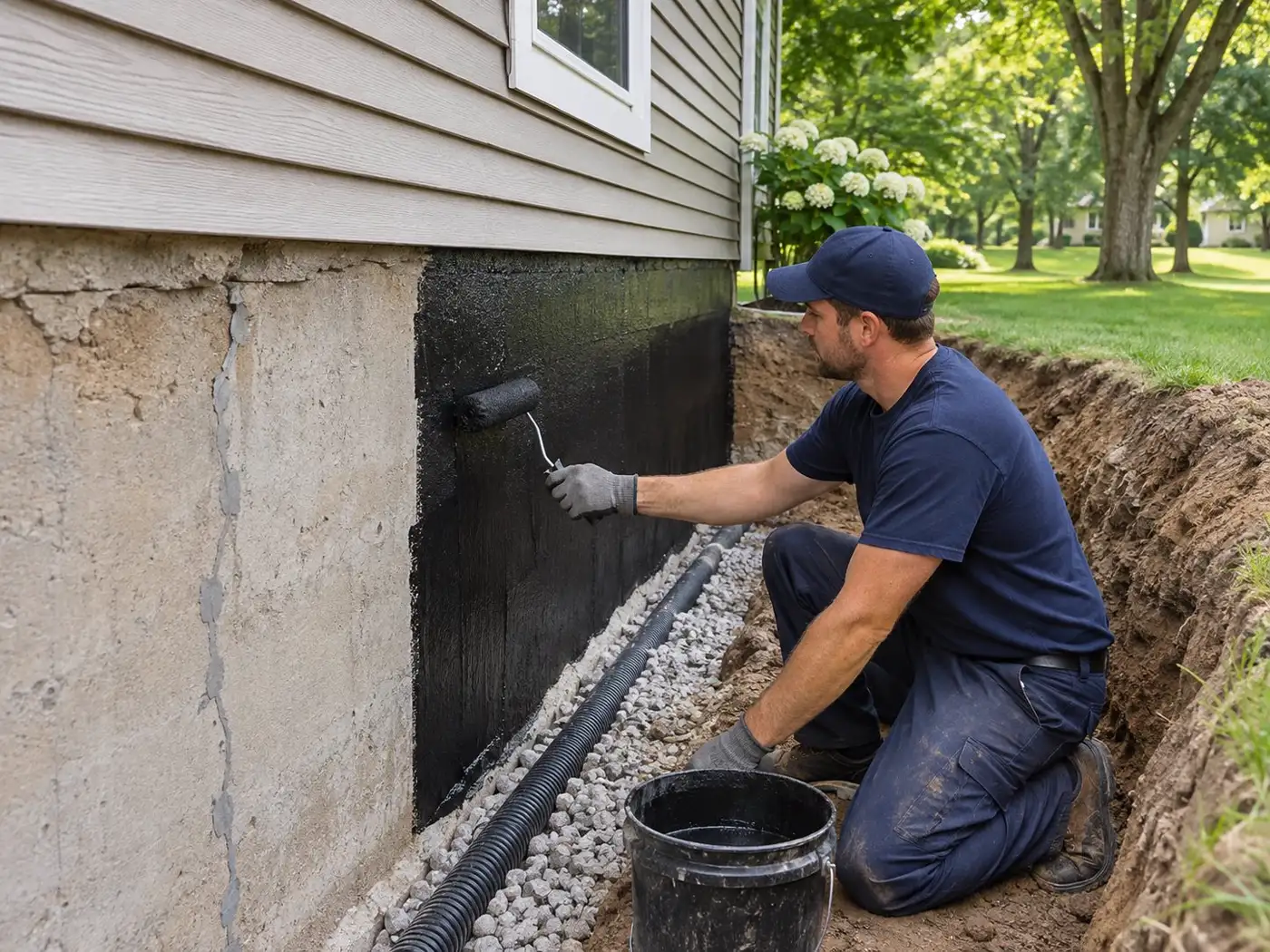
When a wall has moved too far, has sheared at the base or has loose and displaced block, excavation may be needed. The soil is dug out, the wall is straightened or rebuilt, and exterior drainage and waterproofing can be added before the soil goes back.
A basement wall is a retaining wall. Soil leans on it from the outside every day. Most walls handle that load for decades. Trouble starts when the soil gets heavier, wetter or starts to expand.
Saturated soil weighs more and pushes harder than dry soil. When water cannot drain away from the foundation, the sideways load on the wall goes up. Clay is the worst for this, because it swells when wet and holds that water against the wall.
When wet soil freezes, it expands. Frost along the upper part of a basement wall can push it inward, and each thaw lets the soil settle into the new gap. Over many winters, that small push can add up to a wall that is visibly bowed.
A horizontal crack running along a block wall, often a few courses below the top of the soil line, is the classic sign of inward pressure. Stair-step cracks through the mortar joints near the corners are another. Poured walls may show a horizontal crack or diagonal cracks spreading from the corners. Hairline vertical cracks from concrete shrinkage are a different issue and are covered on our foundation crack repair page.
The right fix depends on how far the wall has moved, what it is made of, and how much room there is in the yard.
A wall anchor uses a steel plate inside the basement, a steel rod through the wall, and an earth anchor set in stable soil out in the yard. Tightening the rod holds the wall in place. Over time, and in the right season, the anchors can sometimes be tightened to ease the wall back a little. They need open yard space beside the house.
Steel I-beam braces stand against the inside of the wall. They are fastened to the floor or footing at the bottom and to the floor framing at the top. Braces work well when the yard is tight, such as next to a driveway or a neighboring house.
Carbon fiber straps are bonded to the wall with structural epoxy. They are thin and low profile, which suits finished spaces. They are meant for walls with modest movement, and they hold a wall where it is rather than pull it back.
If a wall has moved a lot, has sheared at the bottom, or has blocks pushed out of line, bracing may not be enough. The soil may need to be dug out so the wall can be straightened or rebuilt, often with new exterior drainage at the same time.
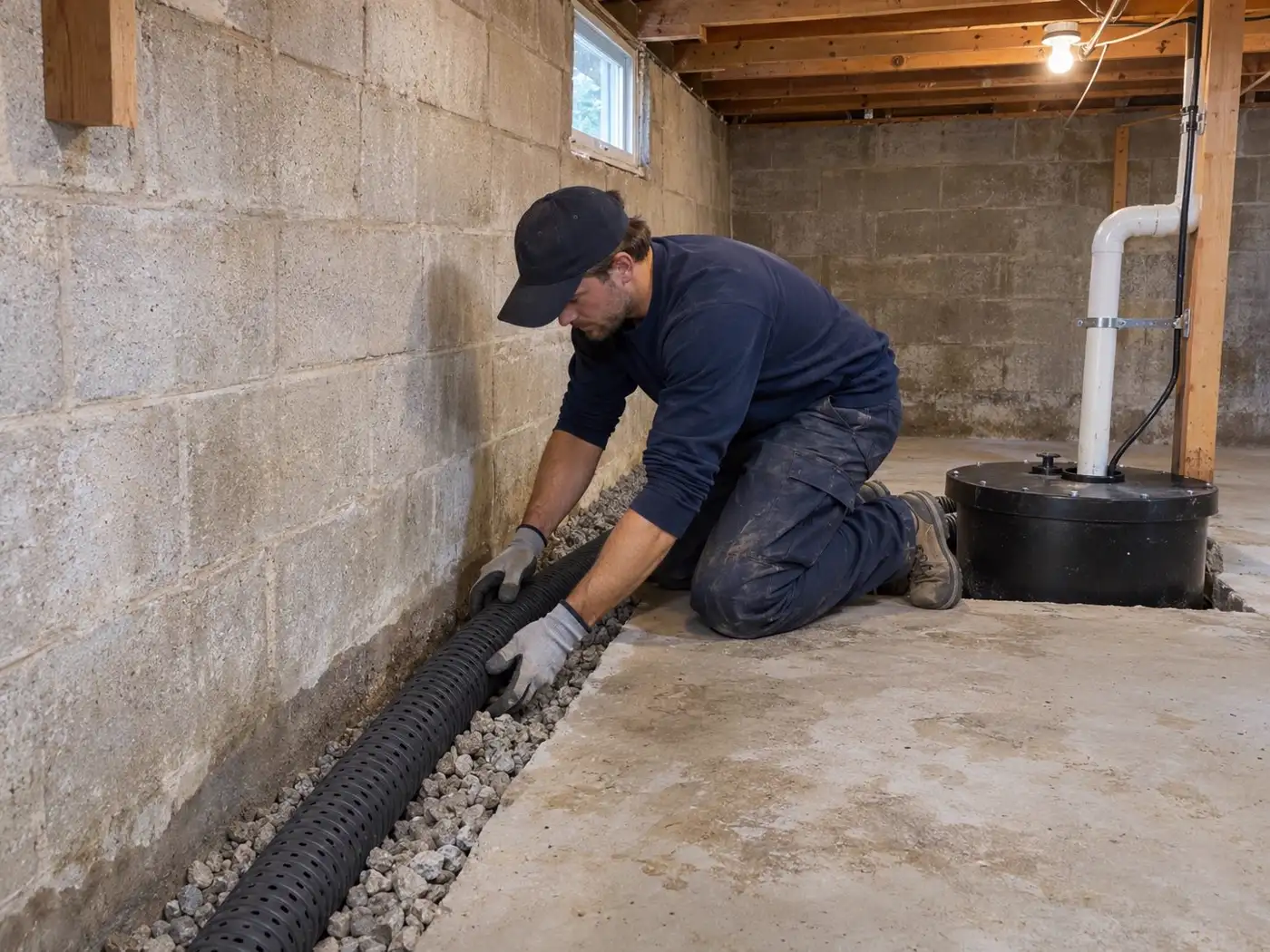
Our area gets deep frost and long winters, so freeze-thaw pressure is a yearly event. Heavy snowmelt in spring can soak the soil right when frost is coming out of the ground. Much of the valley is sandy outwash that drains well, but pockets of clay hold water tight against walls. High groundwater near the Chippewa and Eau Claire rivers can keep soil saturated for long stretches.
Many Eau Claire homes built from the 1940s through the 1970s have concrete block basements. Block is strong under weight from above but weaker against sideways push, so these walls show bowing more often than poured walls. Older stone foundations near downtown may bulge or lose mortar instead. Driveways and patios that slope toward the house, and downspouts that dump next to the wall, often show up right where the worst bowing is. Walls on the uphill side of a sloped lot are another common trouble spot.
We check how far the wall has moved so the repair matches the real problem.
We walk through anchors, braces, carbon fiber and rebuilding, including what each one cannot do.
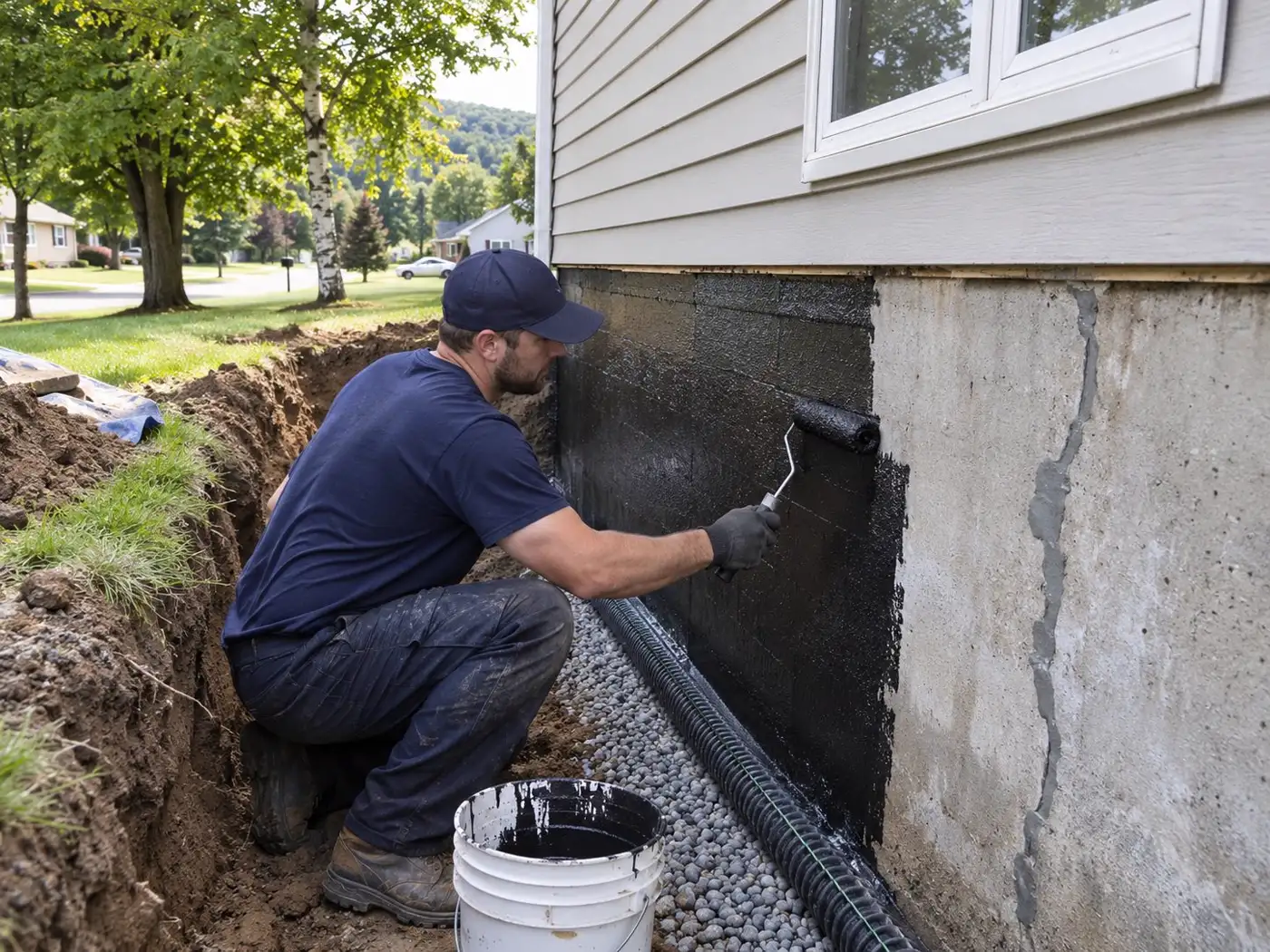
We look at drainage, grading and downspouts so the soil does not keep pushing the wall.
A bowing wall is easier to stabilize before it moves further. Set up a time for us to measure your wall and go over the options.
Get a Free EstimateCall (715) 597-7139
Free — no obligation
We look at the crack pattern, measure the bow and lean, and check the wall top, footing and floor framing above.
We check grading, downspouts, driveways and yard space, since these affect both the cause and which repair will fit.
We recommend anchors, braces, carbon fiber or excavation and explain the spacing, layout and what each step involves.
We install the chosen system at the planned spacing and secure it to stable soil, framing or the wall itself.
We seal the cracks, review drainage fixes with you, and explain how to watch the wall through the next seasons.
It can be. A horizontal crack in a block wall usually means soil pressure is pushing the wall inward. It does not always mean the wall is close to failing, but it should be measured and watched. If the wall is also bowing or the crack is widening, it is worth having it looked at soon.
Sometimes, a little. Anchors are tightened gradually, often when the soil is dry, and some walls ease back over time. Many walls will not return fully to straight. The main goal is to stop further movement and hold the wall where it is.
It depends on how far the wall has moved and its condition. Walls with modest bowing and sound block are often braced or anchored. Walls with large movement, a sheared base or blocks pushed out of line may need to be excavated and rebuilt. Measuring the wall is the first step.
It can help a lot, but it may not be enough on its own. Gutters, downspout extensions and better grading keep soil around the wall drier, which lowers pressure and frost heave. A wall that has already moved usually still needs to be stabilized so it does not keep shifting.