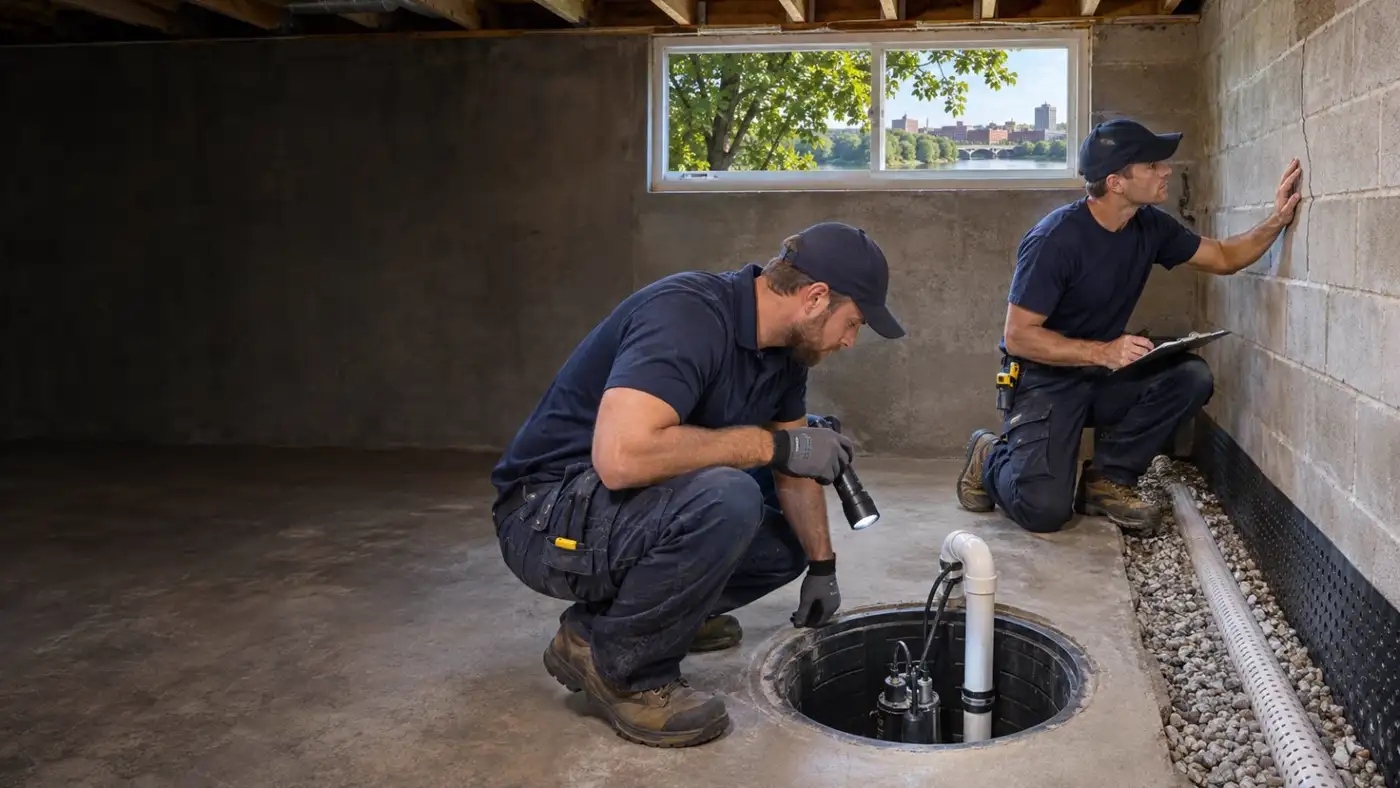
Elk Mound Village and Rural Homes
Basement Waterproofing in Elk Mound, Wisconsin
Find out what is causing water in your Elk Mound, WI basement.
Elk Mound is a small village in Dunn County, laid out in 1871 and named for the glacial hill that rises beside it. The village sits near where I-94 meets US 12, WI-29, and WI-40, and it is surrounded by the farms and wooded lots of the Town of Elk Mound. Homes range from older farmhouses to newer houses on larger country lots.
We help Elk Mound, WI homeowners with leaking basement walls, damp cellars under older houses, crawl spaces that hold moisture, and sump pumps that struggle in spring. Every property is a little different, so we start by learning how water reaches yours. Call (715) 597-7139 to tell us about your basement.
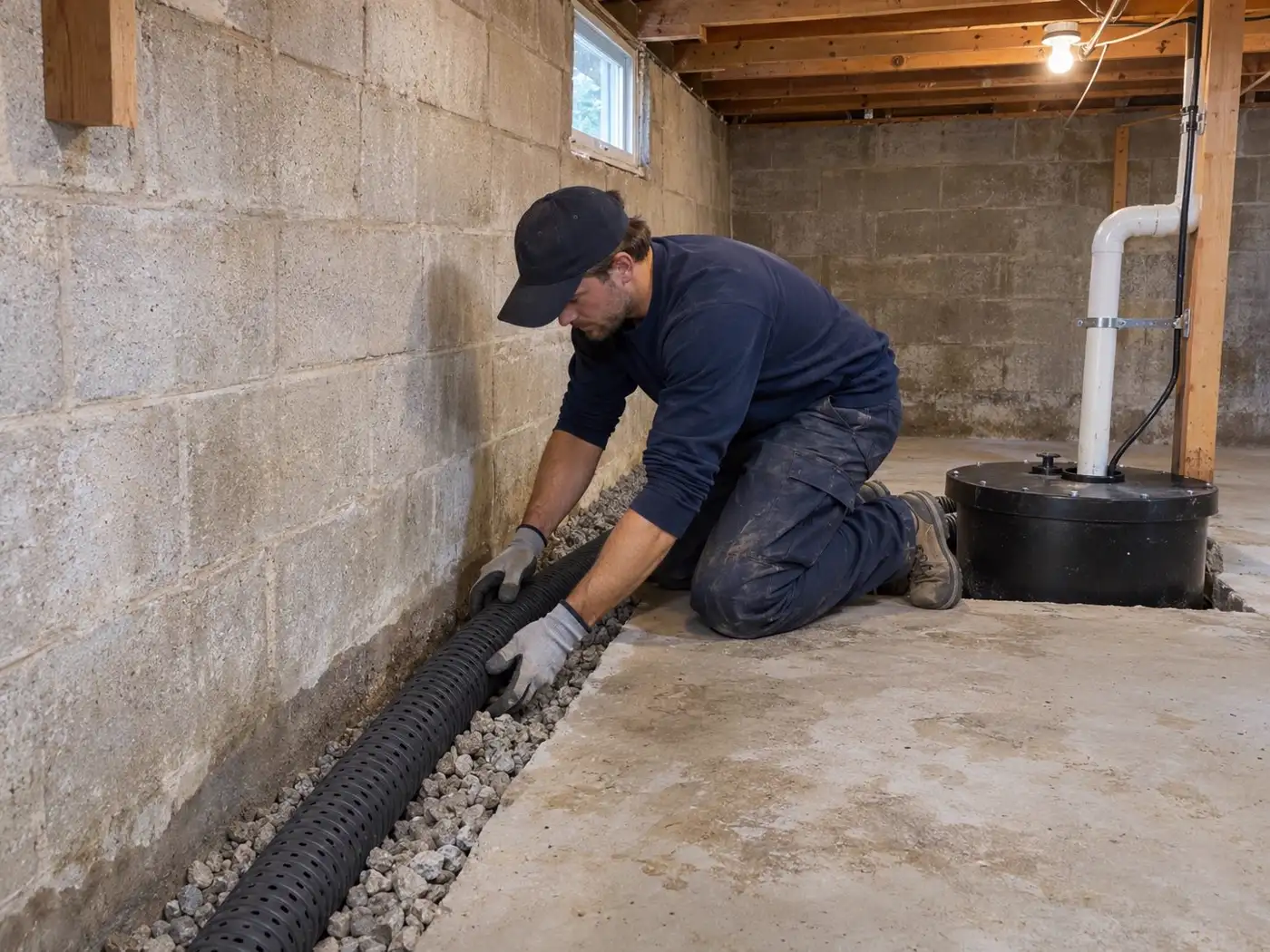
Some farmhouses around Elk Mound were built over fieldstone or rubble foundations, and some have partial cellars with dirt or thin concrete floors. These were built to store food, not to stay bone dry. Water may seep between stones, and the floor may stay damp much of the year.
Not every old cellar needs full waterproofing. Sometimes better drainage outside, a vapor barrier, and a dehumidifier make the space usable for storage and mechanicals.
Older rural homes often grew over time. A house may have a stone cellar under the original section, a block basement under an addition, and a crawl space under a porch or kitchen. Water often enters where these different foundations meet.
We look at each section on its own and at the joints between them, because a fix for one part of the house may not suit another.
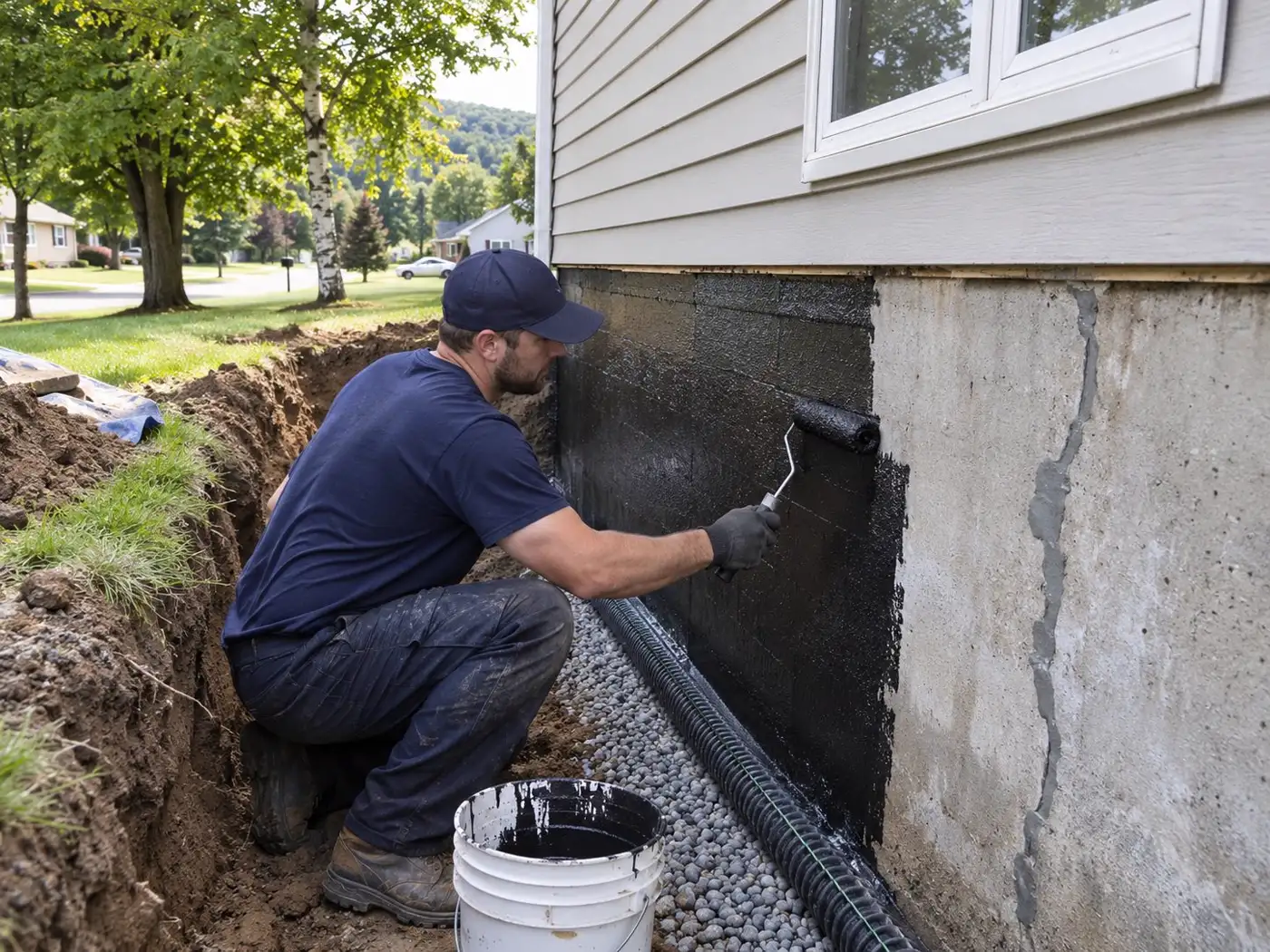
Newer houses in and around the village usually have poured walls or block foundations with drain tile. Larger lots give room for good grading, but long driveways, fields, and slopes can also send a lot of runoff toward a house during snowmelt or a heavy storm.
Swales, longer downspout extensions, and regrading can move that water away. When water still gets in, interior drain tile and a sump may be the next step.
The hill at Mound Hill Park is a kame, a mound of sand and gravel left behind by glaciers. Glacial ground like this can vary from one lot to the next, with sandy pockets beside tighter soils. That means two neighboring homes may handle water very differently.
We do not assume a soil type. We look at how water behaves around your house after rain and during the spring thaw.
Many rural homes around Elk Mound rely on a private well and a septic system. Where a sump pump discharges matters. Water should drain away from the house without flowing toward the well head or soaking the septic drain field.
We plan discharge lines with those features in mind, and we can bury or extend lines so they are less likely to freeze in January.
Crawl spaces under older additions are a common source of musty smells in Elk Mound homes. Bare soil releases moisture into the air, and that air can rise into the rooms above. Wood framing may also stay damp.
A crawl space can often be improved with a ground vapor barrier, sealed openings, and better drainage. We look at the framing and the soil before recommending a plan.
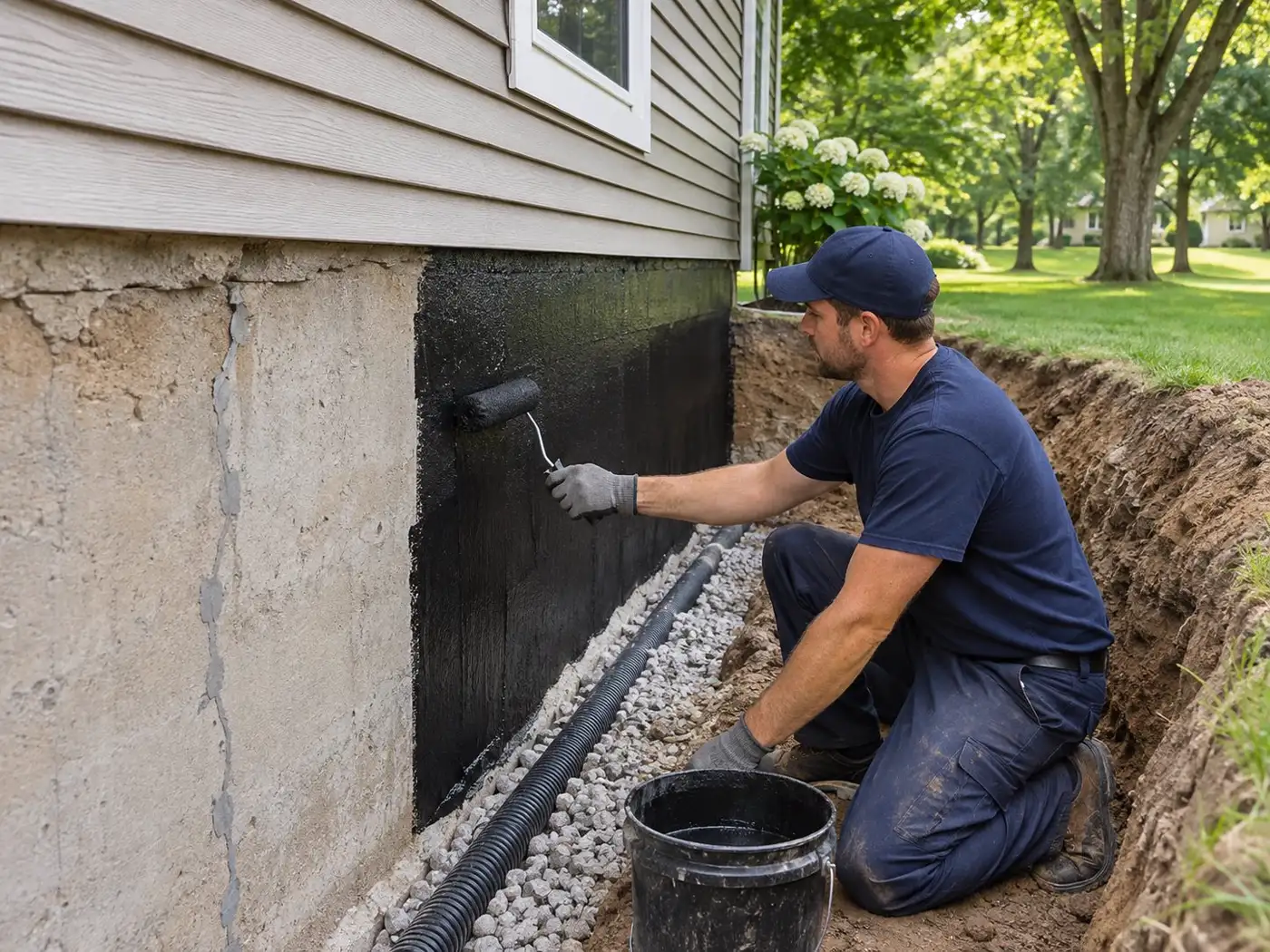
Whether you live on a village street near the schools on University Street or on a farm a few miles out, we can help you sort out where the water comes from and what is worth fixing. Send us a few details to get started.
We work with the stone cellars, block additions, and crawl spaces found in older homes around Elk Mound.
We route sump discharge away from wells and septic fields on country properties near Elk Mound.
We tell Elk Mound owners when a simple drainage change may be enough before suggesting bigger work.
It can often be made drier, though a fully dry stone cellar is hard to promise. Improving drainage outside, adding interior drain tile where possible, sealing gaps, and controlling humidity can make the space more usable. The right mix depends on the walls and how much water comes in.
The discharge should go to a spot that slopes away from the house and stays clear of your well and septic drain field. A longer buried line or a pop-up outlet in the yard can help. We plan the route so water does not come back toward the foundation.
Bare soil in a crawl space gives off moisture, and that damp air can rise into the house. Poor ventilation and water running toward the addition make it worse. A ground vapor barrier, sealed openings, and better outside drainage often reduce the smell over time.
Have a wet cellar or crawl space in Elk Mound, WI? Call (715) 597-7139 and describe the problem.
Get a Free EstimateCall (715) 597-7139
Free — no obligation