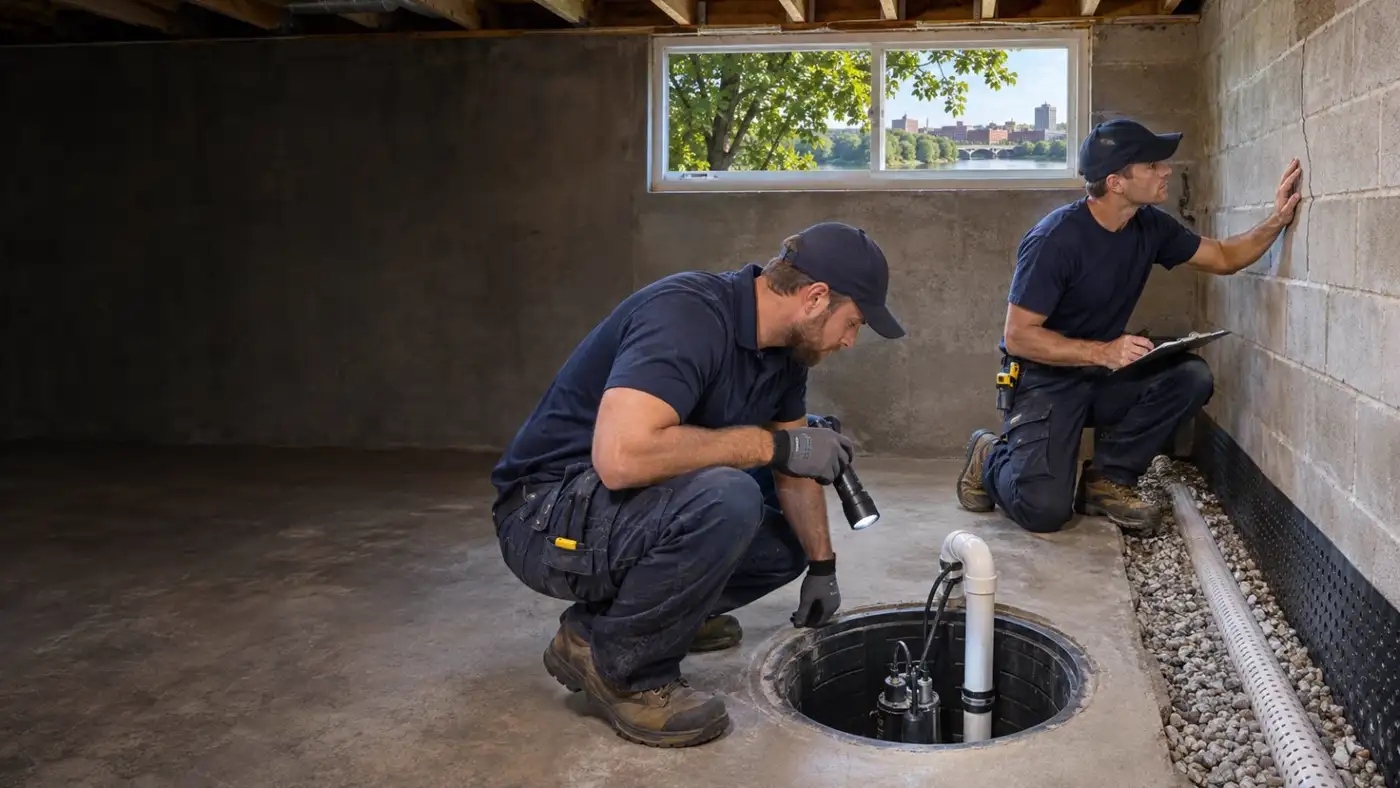
Chippewa Falls Basement Repair
Basement Waterproofing in Chippewa Falls, Wisconsin
Talk with us about a wet or cracked basement in Chippewa Falls, WI.
Chippewa Falls was a lumber town, and its older housing shows it. The West Hill Residential Historic District holds a large group of older homes, and the Cook-Rutledge Mansion on West Grand Avenue dates to the lumber era. Duncan Creek winds through town to the Chippewa River, passing Irvine Park on the way. To the northeast, Lake Wissota draws newer homes and lake cabins along its shoreline.
We help homeowners in Chippewa Falls, WI deal with leaking walls, damp floors and basements that take on water when the creek and river run high. From a century-old stone cellar to a lake home on a slope, we look at the real cause first. Call (715) 597-7139 to describe what is happening.
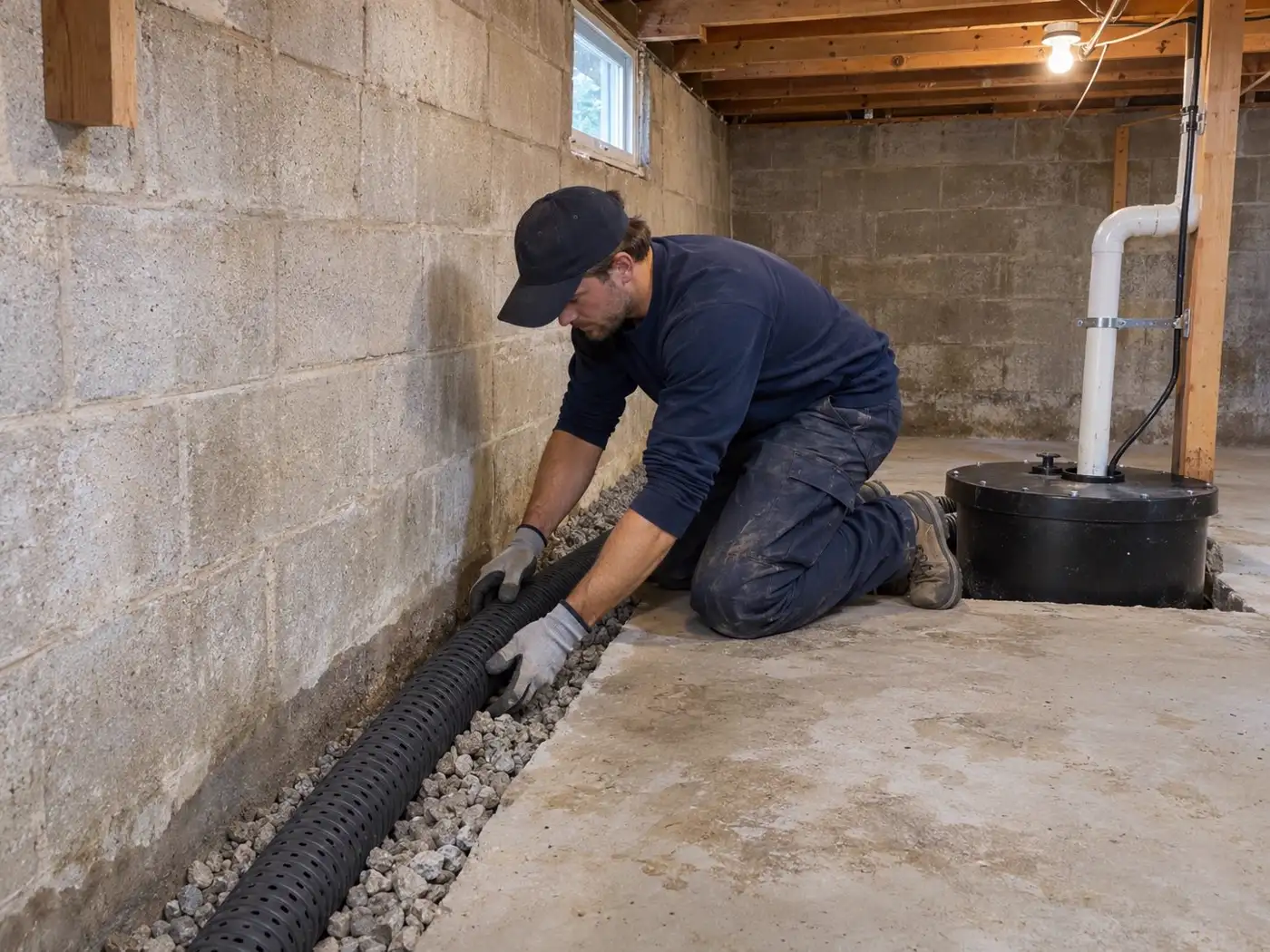
Many homes in the older parts of Chippewa Falls were built on stone or rubble foundations. Builders of that era used local stone and lime mortar. Over a hundred years of frost, that mortar can wash out and leave open joints.
Water through these walls often shows as wet patches, sandy debris at the base of the wall and white mineral crust. Repointing the joints and adding interior drain tile can help these walls shed water while keeping their character.
Duncan Creek has a long record of high water. A spring flood in 1934 damaged two bridges in Irvine Park. In 1884, dams on the Chippewa River and Duncan Creek gave way and caused heavy damage to homes and businesses in the city.
Today the creek is controlled by dams such as Glen Loch in Irvine Park and the Star Mill Dam downstream. Even so, homes on low ground near the creek may see a high water table in wet seasons. That water often enters at the wall-floor joint.
The state has been remapping flood risk on the Chippewa River, Duncan Creek and other local streams using newer terrain data. If you live near the water, your flood zone may differ from what it was years ago.
Waterproofing does not replace flood insurance or protect against a river over its banks. It does help with the slower problem of groundwater seeping in during wet springs.
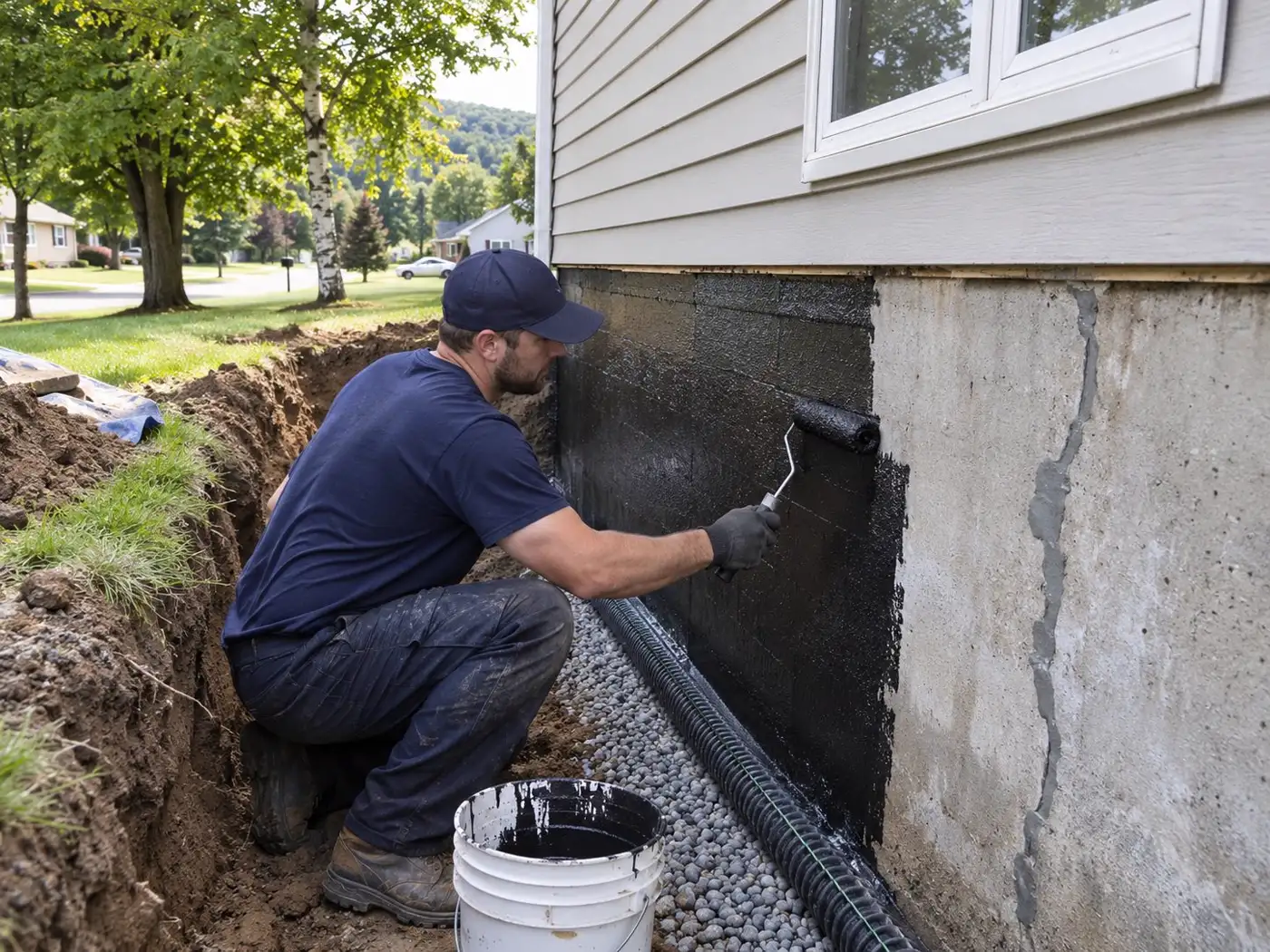
Lake Wissota formed after a dam was finished on the Chippewa River in 1918. Lake homes often sit on lots that slope toward the water, with walkout basements facing the lake. Uphill walls often carry the most soil and water pressure.
On these lots, water from the road side can soak the soil behind the back wall. Exterior drainage, downspout extensions and footing drains on the uphill side are often worth a look.
Chippewa Falls winters can drive frost deep into wet soil. Freezing clay or silty backfill expands and pushes inward on block walls. Cracks that run sideways along a mortar line, or a wall that leans in at the middle, are warning signs.
We measure how far a wall has moved and talk through options. Those may include wall anchors, bracing or rebuilding a section, depending on the damage.
Many older Chippewa Falls homes never had a sump pit. Adding one with interior drain tile gives groundwater a path out before it rises through the floor. Homes that already have a pump may need a better check valve or a longer discharge line.
We make sure discharged water goes far enough from the house that it does not circle back to the foundation.
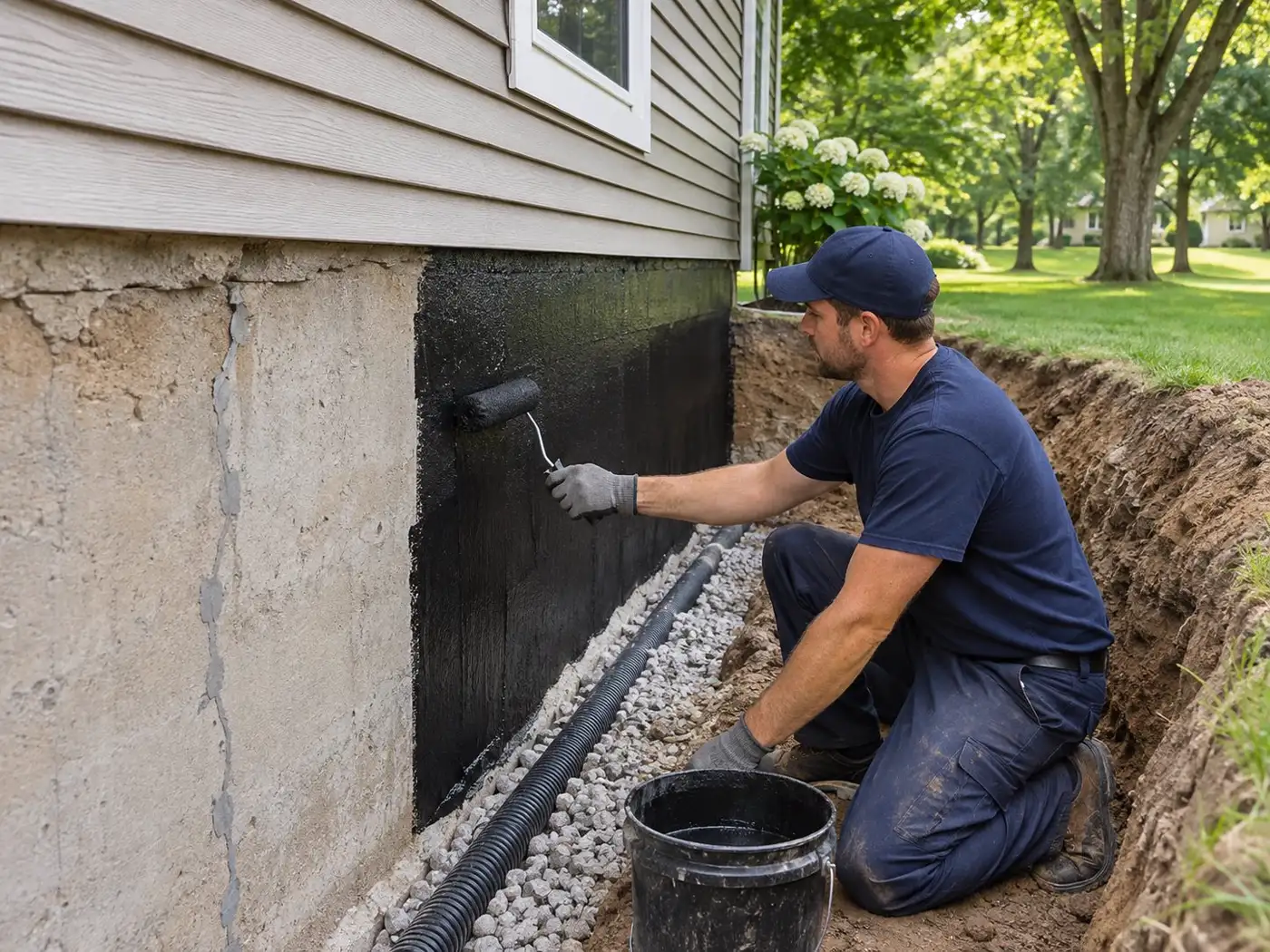
Share your neighborhood or nearest landmark in Chippewa Falls, the age of the home and when water shows up. Photos of the wall, cracks or sump area help us plan. We will explain the likely cause and the repairs that suit your foundation.
We repair stone and rubble foundations common in older Chippewa Falls homes without rushing to replace them.
We consider how Duncan Creek and Chippewa River levels affect groundwater near your Chippewa Falls home.
We plan uphill drainage for sloped Lake Wissota lots and walkout basements facing the water.
Homes on low ground near the creek can have a high water table, especially in spring. Groundwater presses on the floor and the bottom of the walls and finds the joint between them. Interior drain tile with a sump pump is a common way to relieve that pressure.
Many can be made much drier. Repointing worn mortar, sealing large gaps and adding interior drainage are common steps. Old stone walls usually need methods that let them breathe, so we avoid coatings that trap moisture inside the masonry.
The back wall of a walkout usually holds back the most soil, and water from the uphill side soaks in behind it. Better grading, longer downspouts and footing drains on that side may reduce the water. We check the wall for cracks or bowing too.
Need basement waterproofing in Chippewa Falls, WI? Call (715) 597-7139 to describe your problem, and we will talk it through.
Get a Free EstimateCall (715) 597-7139
Free — no obligation