Menomonie Basements and Foundations
Basement Waterproofing in Menomonie, Wisconsin
Get a clear plan for your wet basement in Menomonie, WI.
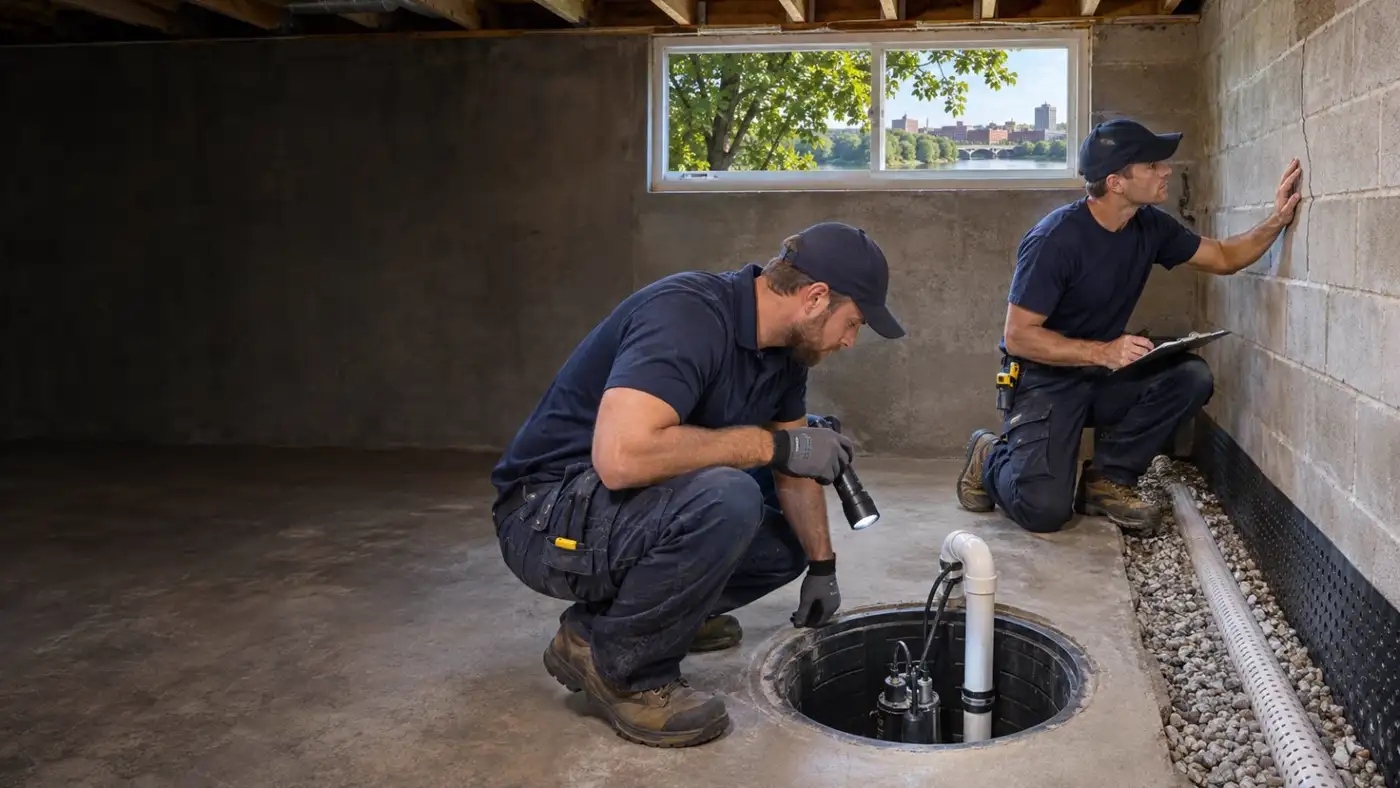
Menomonie wraps around the south end of Lake Menomin, a reservoir on the Red Cedar River. The historic downtown and the UW-Stout campus sit close together, and the streets around them hold many older homes on smaller lots with mature trees. Farther out, newer subdivisions and river-view lots add a different mix of basements. Each one handles water in its own way. Wakanda Park, along the shore of Lake Menomin, is a good example of how close many homes here sit to the water.
We help homeowners and landlords in Menomonie, WI deal with damp walls, water at the floor edge, cracked foundations, and basements that smell musty no matter how often they are cleaned. The first step is finding where the water comes from and why. Call (715) 597-7139 to tell us what you are seeing.
Many homes in the blocks around downtown Menomonie were built long before modern foundation coatings and drain tile were standard. Some sit on stone, brick, or early concrete block walls. Mortar joints in these walls can soften over the decades, and water may find its way through them during wet weather.
A white, chalky crust on the wall, called efflorescence, often means moisture is moving through the masonry. It does not always point to a major leak, but it is worth checking before you finish the space.
With a large university in town, many Menomonie houses are rentals. Basements in these homes often hold laundry, storage, or the furnace, and a tenant may not notice slow seepage until belongings are damaged. Landlords may only hear about a problem after it has been going on for a while.
We can look at a rental property between tenants or during the school year and explain what we find in plain terms, so owners can plan repairs around leases.
Homes on slopes that run down toward Lake Menomin or the Red Cedar River can collect runoff from the yards above them. Soils in the river valley often include loamy layers over sandy outwash, which can drain well in one spot and hold water in another.
Being near the water does not by itself cause a wet basement. Grading, gutter discharge, and the condition of the foundation usually matter more, and those are the things we check first.
March and April can be the hardest months for Menomonie basements. Snow melts while the ground below is still frozen, so water sits near the foundation instead of soaking away. If a home has a sump pump, this is when it works hardest.
A pump that runs nonstop, short-cycles, or has never been tested may fail when it is needed most. We can check the pit, the pump, the check valve, and where the discharge line drains.
When wet soil freezes against a foundation, it expands and pushes on the wall. Over many winters, block walls can develop a horizontal crack partway up, or begin to lean inward. Poured walls tend to show vertical or diagonal cracks instead.
A bowing wall needs a careful look before anyone talks about fixes. Measuring the movement and finding the source of the water helps decide whether bracing, anchors, or drainage work makes sense.
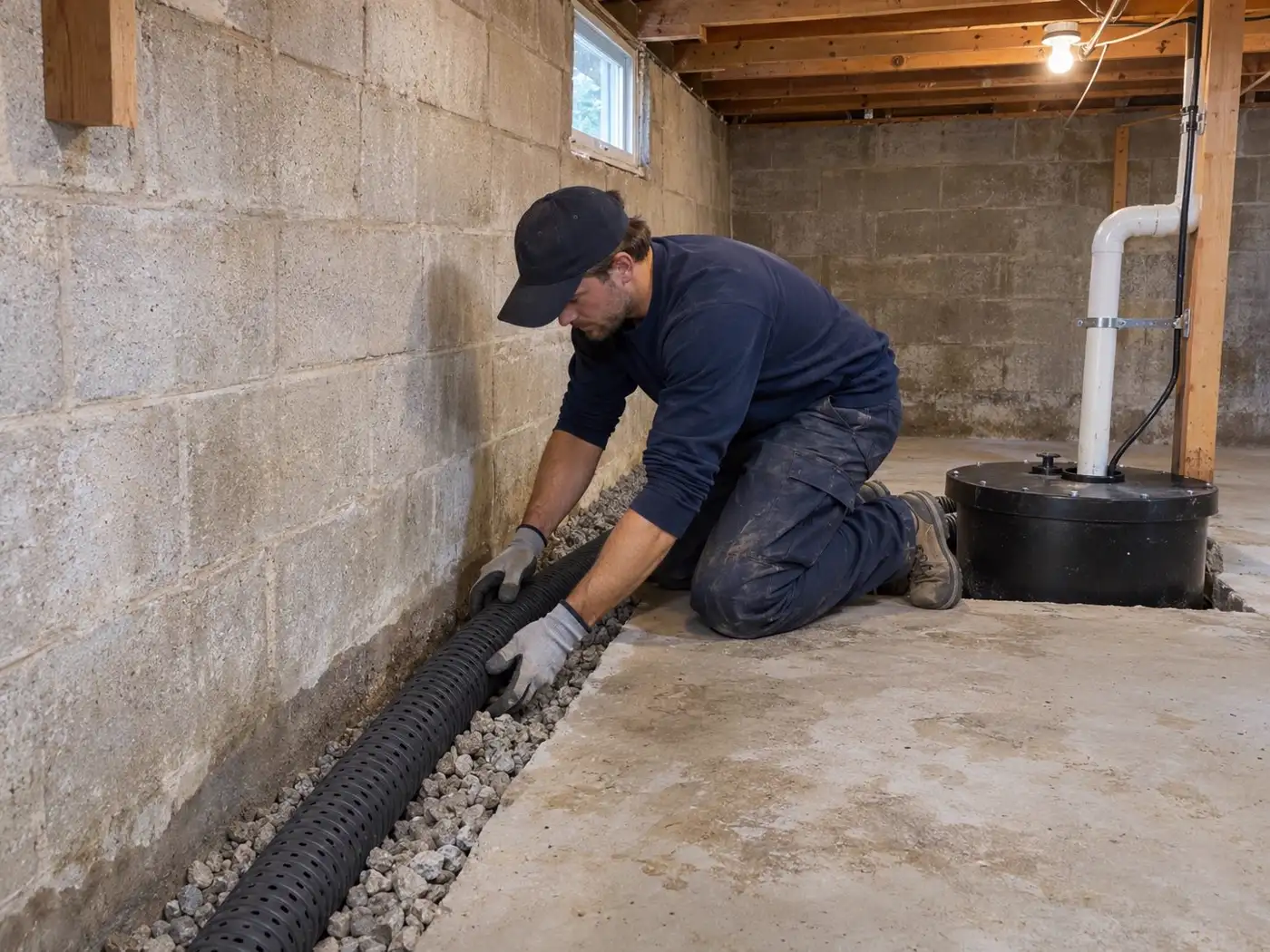
For many older Menomonie basements, an interior drain tile system along the footing can collect seepage at the wall-floor joint and send it to a sump. It avoids digging up landscaping, porches, or driveways on tight city lots.
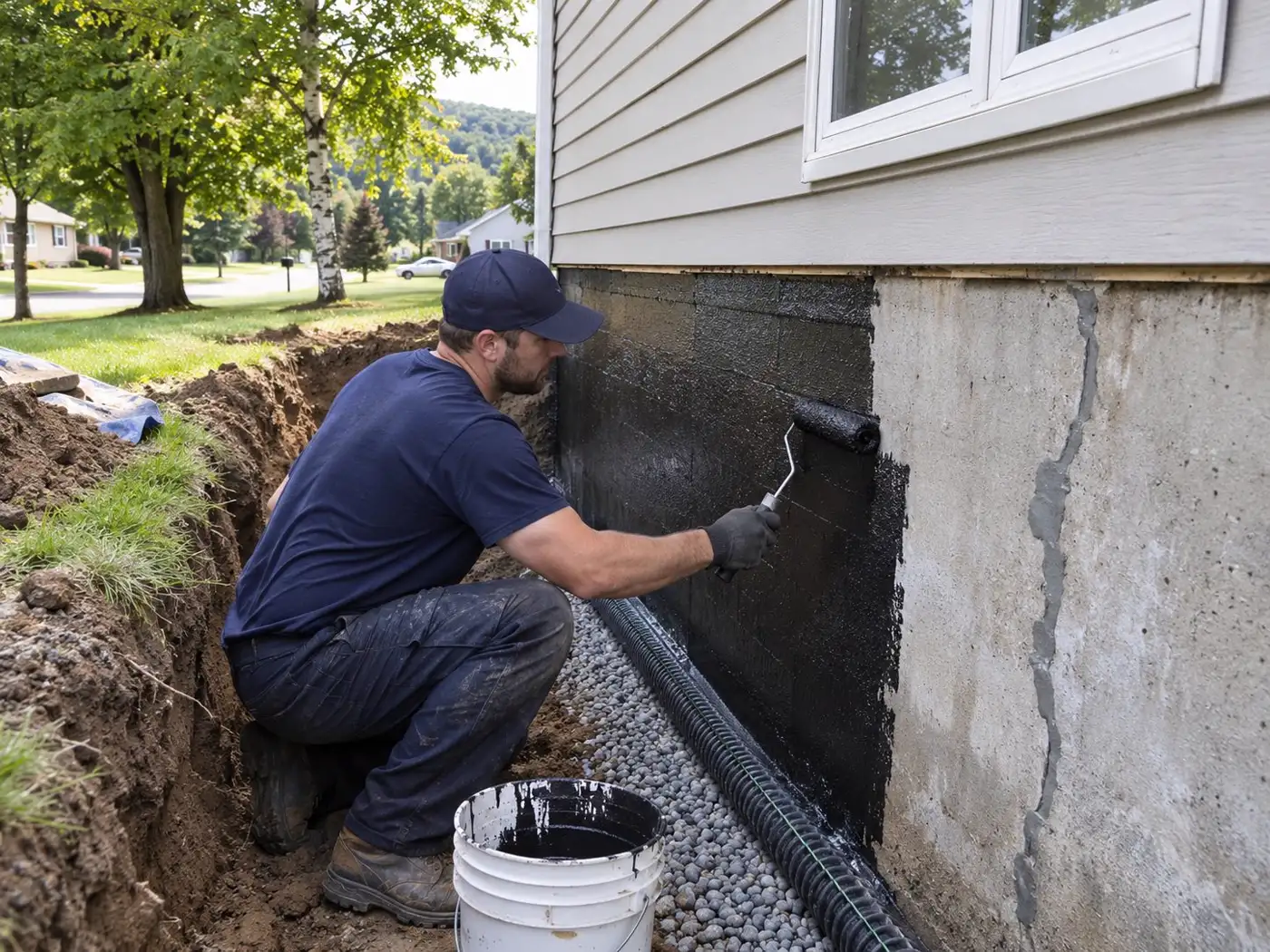
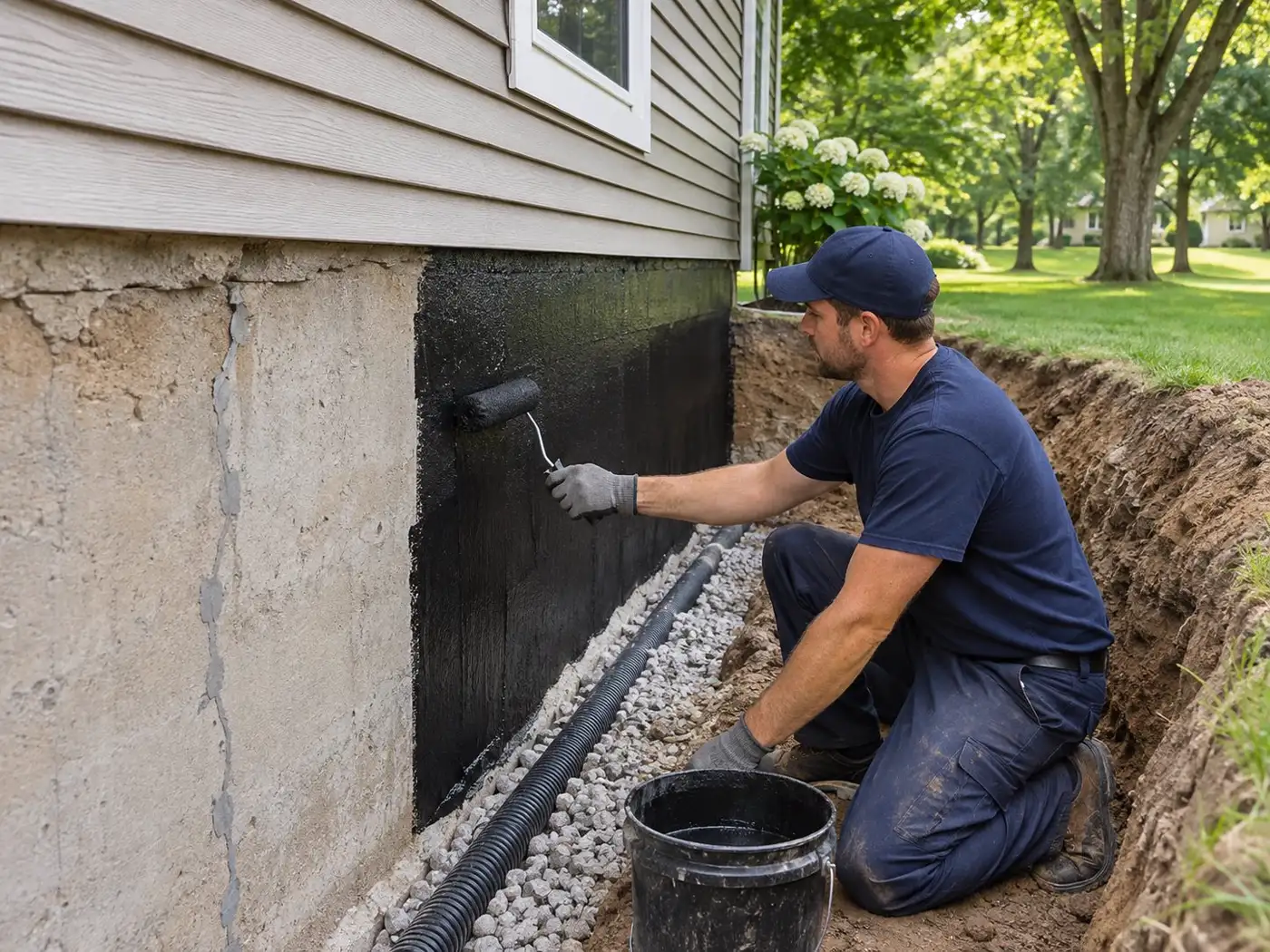
On some homes, exterior excavation and a membrane on the outside of the wall may be a better fit. We explain the tradeoffs of each approach for your specific house.
Whether you own a home a few blocks from the Mabel Tainter Memorial, a rental close to campus, or a newer house on the edge of town, we can help you understand why your basement gets wet and what can be done about it. Share what you have noticed, and we will take it from there.
We look closely at the stone, brick, and block foundations common in the older blocks near downtown Menomonie.
We can inspect rental basements near UW-Stout and explain findings clearly so owners can plan around tenant schedules.
We check grading and runoff on sloped lots that drain toward Lake Menomin and the Red Cedar River.
That powder is usually efflorescence. It forms when water moves through masonry and leaves minerals behind as it dries. Stone and block walls in older Menomonie homes often show it. It tells you moisture is getting in, so it is a good reason to look at grading, gutters, and wall condition.
Between tenants is often a good time to look. The basement is easier to reach, and any work causes less disruption. If you have seen damp spots, a musty smell, or water at the floor edge, checking before move-in may help prevent damaged belongings and complaints later.
Not necessarily. Many homes near Lake Menomin stay dry. Basement leaks more often come from surface water, roof runoff, and cracks or gaps in the foundation than from the lake itself. Slopes that drain toward the house matter, so we look at how water moves across your lot.
Dealing with a damp basement in Menomonie, WI? Call (715) 597-7139 and tell us what is going on.
Get a Free EstimateCall (715) 597-7139
Free — no obligation