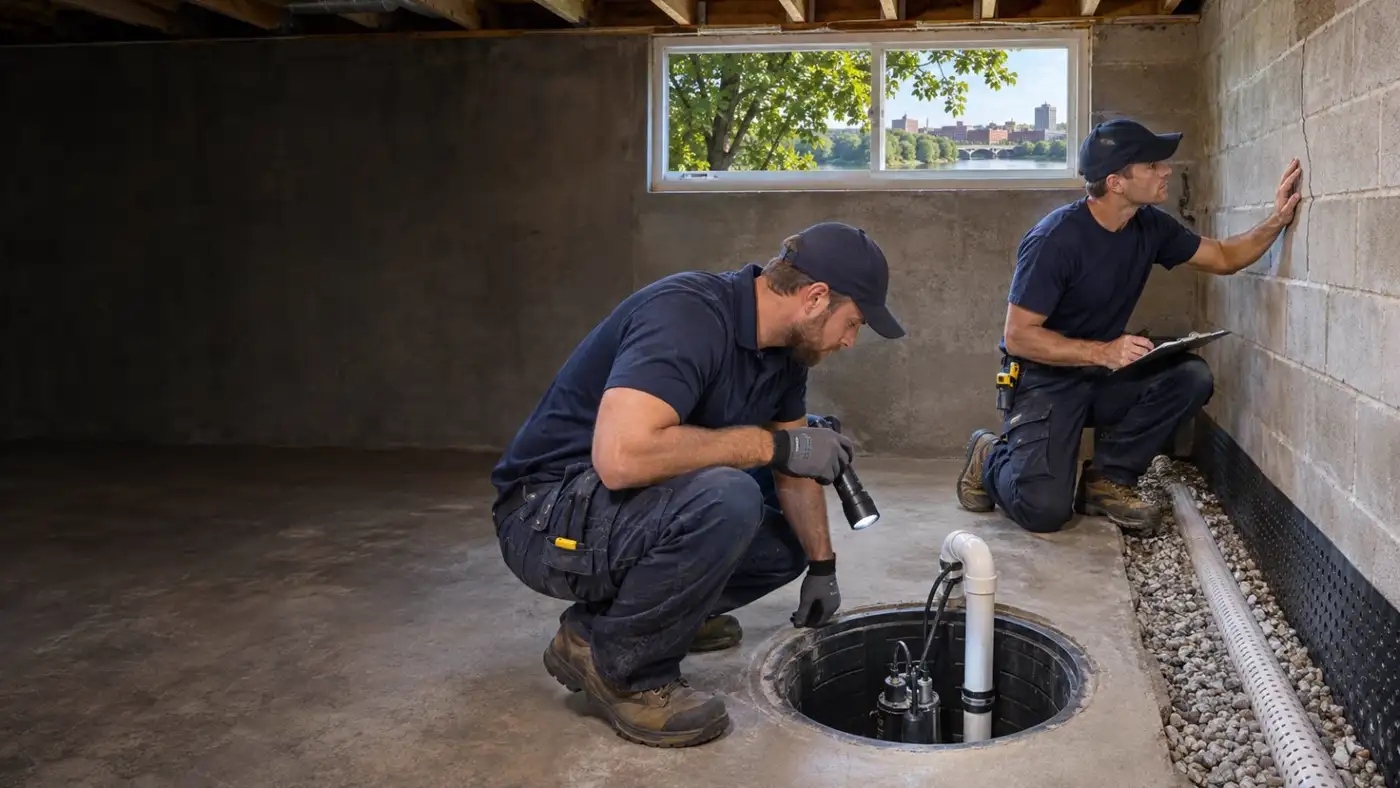
Eau Claire Wet Basement Help
Basement Waterproofing in Eau Claire, WI
Get a clear plan for a damp or leaking basement in Eau Claire, WI.
Eau Claire grew up where the Chippewa and Eau Claire rivers meet, and many of its basements show that history. Randall Park holds some of the oldest inner-city homes, with many built from the 1870s on. The Third Ward was platted in the 1870s and 1880s near what is now UW-Eau Claire. Eastside Hill has homes from roughly the 1880s to the 1920s. Newer subdivisions on the edges of town add poured walls and modern drain systems to the mix. The same goes for neighborhoods like North Side Hill, Shawtown, and the streets around Putnam Heights, where homes from several decades sit side by side.
We help homeowners in Eau Claire, WI figure out why water is getting in and what will actually stop it. That might be seepage at the wall-floor joint, a cracked wall, a sump pump that cannot keep up, or a musty smell with no clear source. Call (715) 597-7139 to talk through what you are seeing.
The city draws its drinking water from a sand and gravel aquifer in a buried glacial valley, and the Chippewa River helps recharge it. That same porous ground sits under many neighborhoods near the rivers. When the rivers run high in spring, the water table nearby can rise too.
A basement that stays dry most of the year may take on water only during those high-water weeks. That pattern often points to groundwater pushing up from below, not a roof or gutter problem. Knowing the timing helps us pick the right fix.
Flooding has been the most common natural disaster in Eau Claire's past. The 1884 flood on the Chippewa carried away homes and every bridge in town. The 1941 flood put water into about 30 buildings, from basements up to the first floor, and major floods came again in 1967 and 1993. The city bought out homes in the Forest Street area after repeated losses there.
City documents note that many residential areas along both rivers sit inside the 100-year floodplain. Waterproofing cannot hold back a river over its banks. It can, however, help manage the seepage and pressure that come with a high water table.
Homes from the late 1800s were often built on fieldstone, rubble or early block foundations. Mortar joints in those walls wear out over a century or more of freeze-thaw cycles. Water then finds the weak joints first.
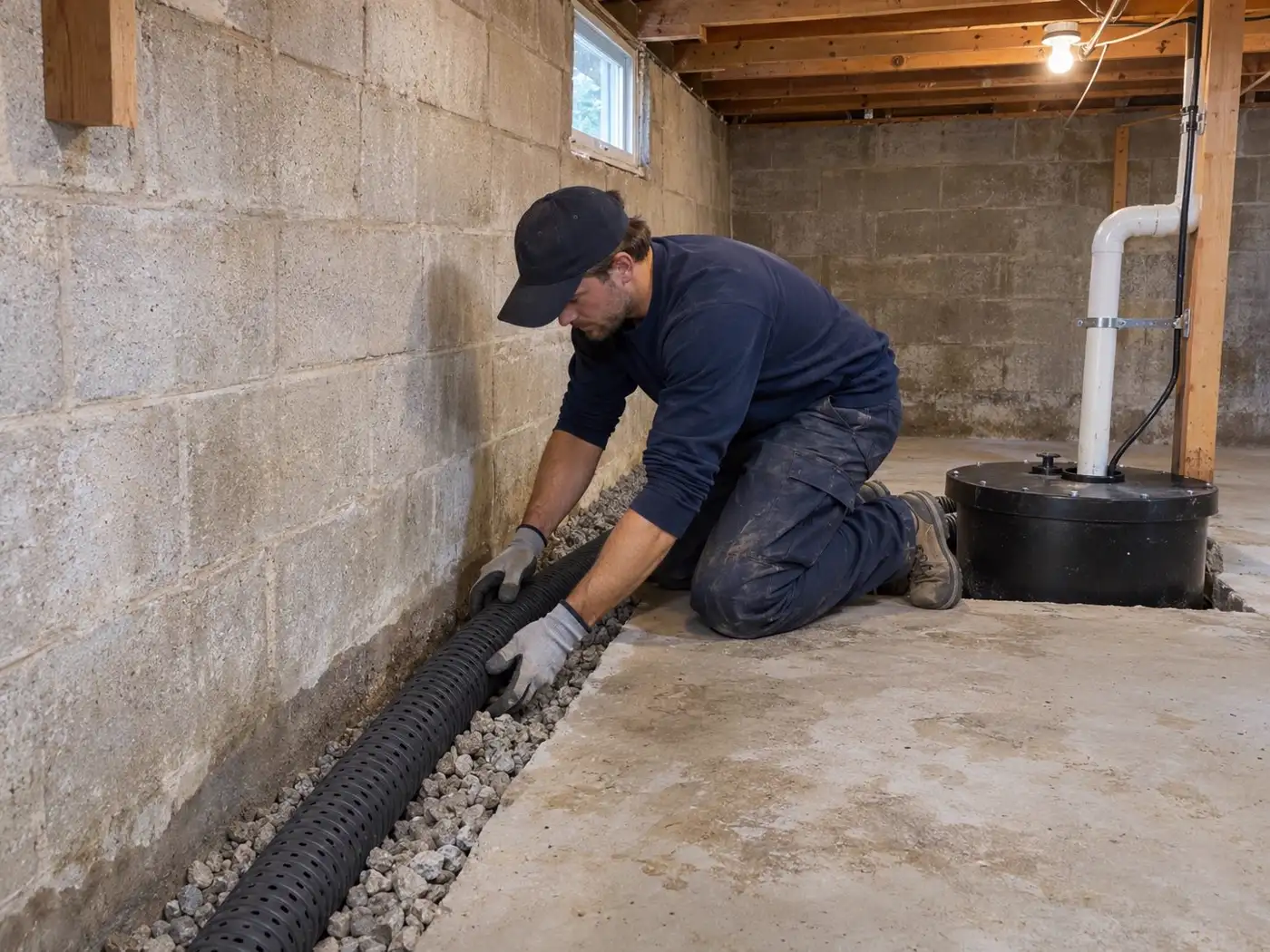
White, chalky efflorescence on old walls is a common clue. It means water is moving through the masonry and leaving minerals behind. Interior drain tile with a sump is often a practical option for these walls, since digging along tight older lots can be hard.
Eastside Hill rises above the river, so many lots sit on a grade. Runoff from uphill yards, driveways and downspouts can collect against a foundation on the low side. Spring snowmelt makes it worse when the ground is still frozen and water cannot soak in.
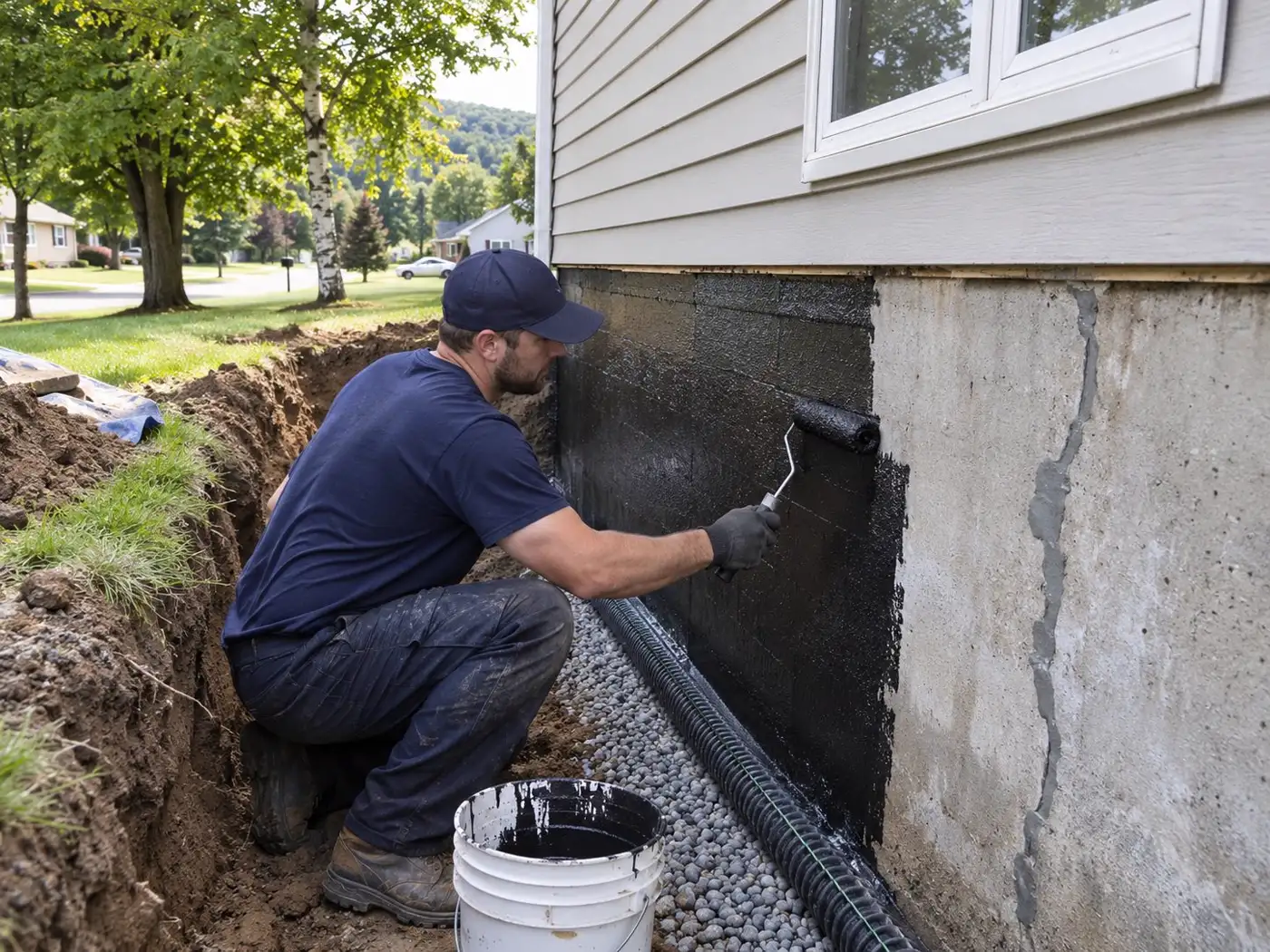
On sloped lots we often start outside. Regrading, extending downspouts and fixing low spots may cut the water reaching the wall. If the wall still leaks after that, we look at cracks or drainage at the footing.
A poured wall from the last few decades is not immune to water. Shrinkage cracks, form tie holes and settled backfill can all let water in. A failed or undersized sump pump is another common cause in newer houses.
We check the pump, the discharge line and the basin before suggesting anything bigger. Sometimes a crack injection or a pump upgrade is all a newer home needs.
Eau Claire winters push frost deep into the soil around a foundation. Wet soil that freezes expands and presses on the wall. Over many winters, block walls can crack in a stair-step or horizontal pattern and start to lean inward.
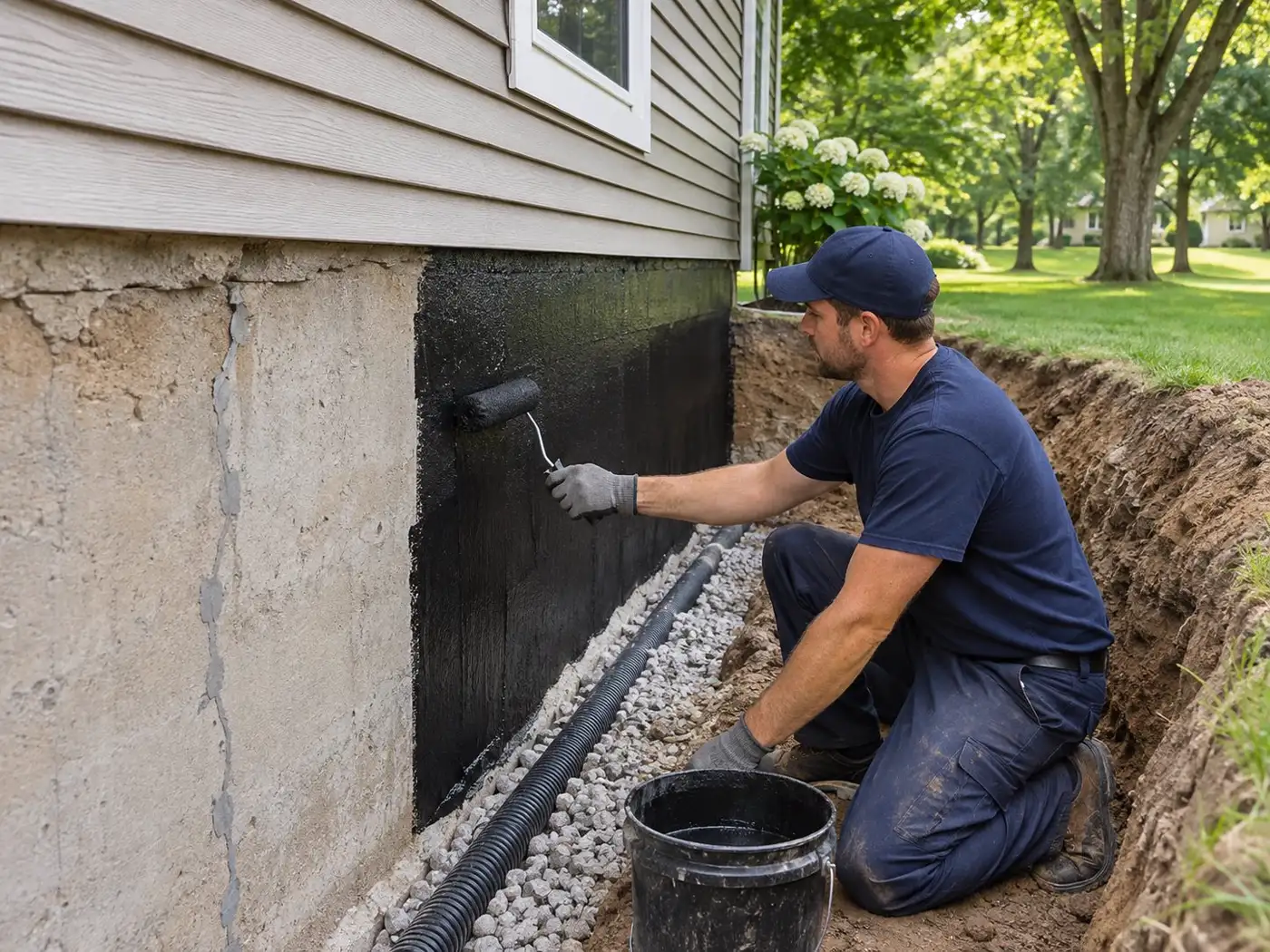
A horizontal crack or a wall that bows is worth a close look soon. Wall anchors, bracing or excavation may be options, depending on how far the wall has moved.
Tell us where you live in Eau Claire, how old the house is and when the water shows up. Photos of cracks, stains or the sump pit help a lot. We will explain what we think is happening and which repairs make sense for your basement.
We look at how high spring water on the Chippewa and Eau Claire rivers affects groundwater near your home.
Stone and early block walls in Randall Park and the Third Ward need methods suited to old masonry.
We explain whether the water is surface runoff or groundwater before we suggest any Eau Claire repair.
Spring snowmelt and high river levels can raise the water table in the sandy ground near the river. That groundwater can push in at the wall-floor joint or through floor cracks. Interior drain tile and a reliable sump pump are common ways to manage it.
Often, yes. Many older stone and rubble walls can be repointed where mortar has failed, and interior drain tile can collect water at the base of the wall. The right approach depends on how solid the wall is and where the water enters.
It may be. Sloped lots can send runoff toward the foundation, especially during thaws. We usually check grading, gutters and downspouts first, since fixing surface water can be simpler than changing anything inside the basement.
Need basement waterproofing in Eau Claire, WI? Call (715) 597-7139 to describe your problem.
Get a Free EstimateCall (715) 597-7139
Free — no obligation