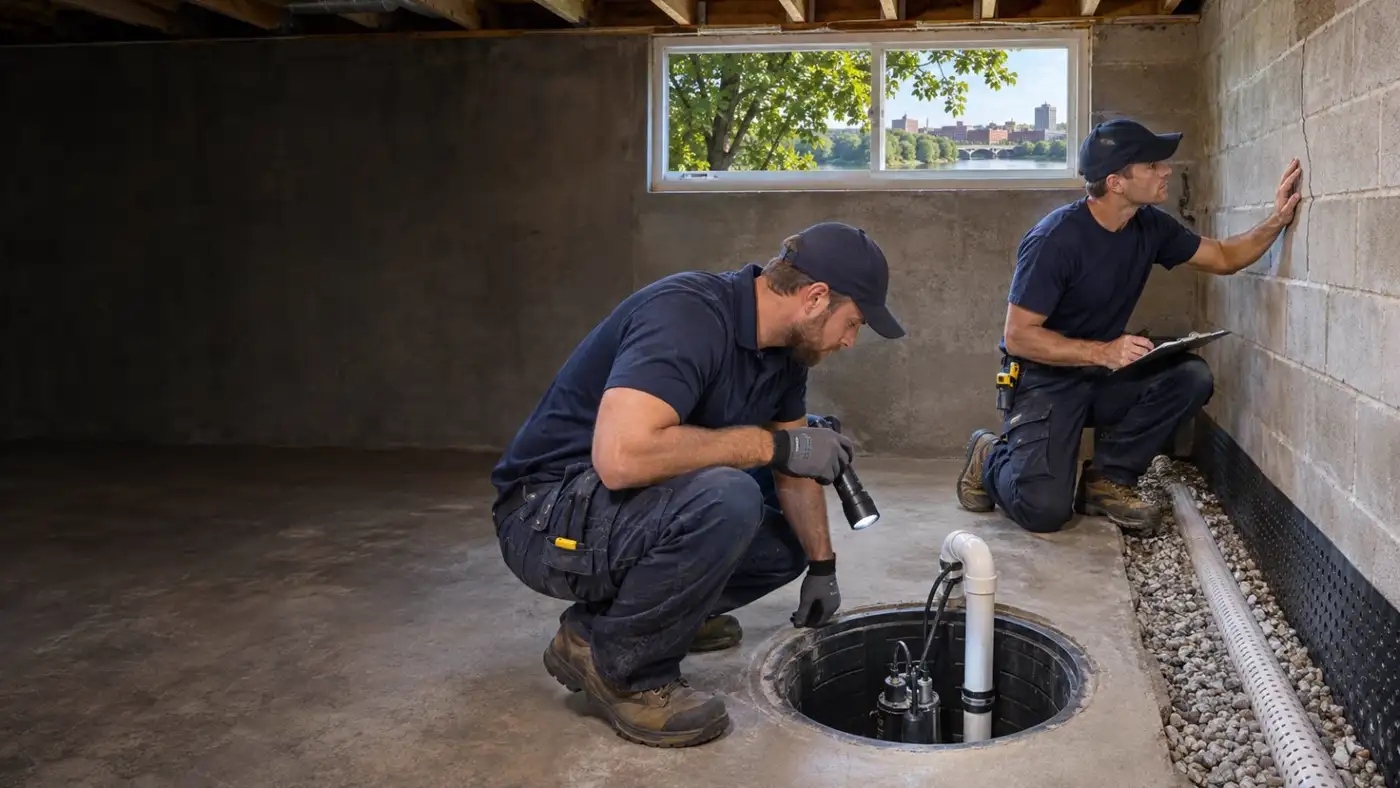
Dry Basements in the Chippewa Valley
Basement Waterproofing in Eau Claire, Wisconsin
Find out why water is getting in and how to stop it.
Spring thaw, summer storms, and a high water table near the Chippewa and Eau Claire rivers put a lot of pressure on basements in this area. Water can come through cracks, along the joint where the wall meets the floor, or up through the slab itself. We help homeowners find out where it is coming from and what will actually stop it.
Some basements need a full drainage system with a sump pump. Others need one crack sealed, a wall stabilized, or a downspout moved. We start with a careful look at the basement and the outside of the home, then explain the options in plain language so you can decide what makes sense for your house and budget.
Basement Waterproofing in Eau Claire, WI focuses on one thing: helping Chippewa Valley homeowners deal with water, cracks, and moisture below grade. We know the older block foundations near downtown, the newer poured walls in growing subdivisions, and the sandy soils and spring melt that test them both every year.
We believe a homeowner should understand the problem before paying to fix it. That means pointing out what we see, explaining why it is happening, and being honest when a smaller repair will do the job. Our goal is a dry basement and a plan you feel good about.
More about us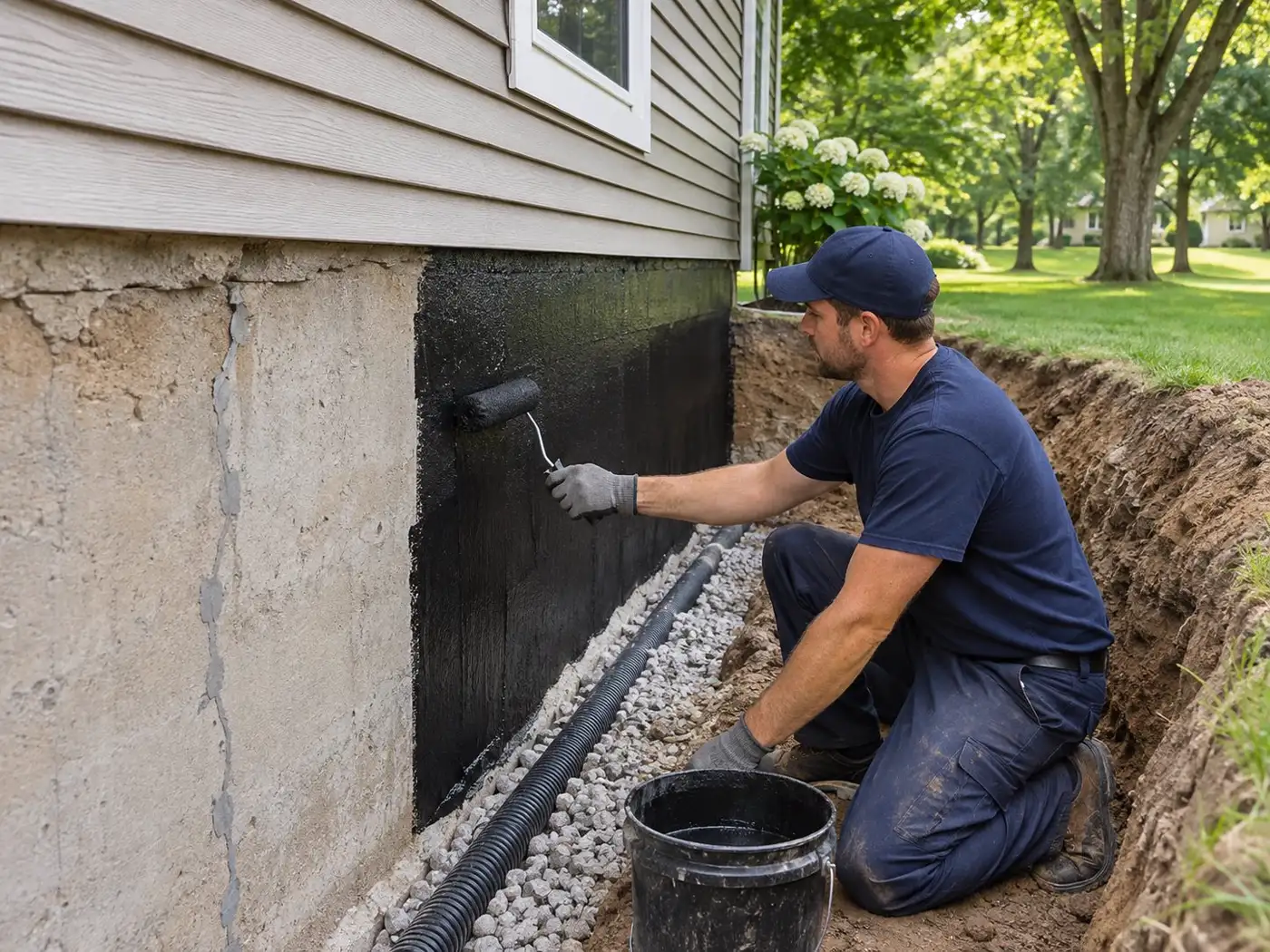
Our services cover the most common reasons basements in the Chippewa Valley take on water or start to move. Basement waterproofing is the core of what we do, including interior drainage and exterior foundation waterproofing for homes where water pushes through walls or rises at the floor joint. Foundation crack repair seals leaking cracks in poured walls from the inside and checks whether a crack is a sign of something bigger. Sump pump installation and repair keeps the system that moves water out of your home working when spring thaw and storms hit, including backup pumps and discharge lines that will not freeze. Interior drain tile collects water along the footing and carries it to the sump, without digging up your yard. Bowing wall repair and wall anchors help stabilize block and poured walls pushed inward by frost and saturated soil. Crawl space encapsulation seals damp crawl spaces with a liner and moisture control so musty air stops rising into the house. Each service page explains how the work is done, what to watch for, and how we decide what your home needs. Not every home needs every service. A single leaking crack in a poured wall may only need an injection repair, while a block basement that takes on water along the whole floor joint usually needs drain tile and a sump. Some homes need a mix, such as wall anchors to stop movement followed by drainage to handle the water that caused it. We start with an inspection of the basement and the outside of the house, including gutters, downspouts, and grading, so the work matches the real cause instead of the biggest possible job.
Stop basement seepage with interior and exterior waterproofing matched to your foundation, soil, and water source.
Learn more →Seal leaking foundation cracks and reinforce walls showing movement, with repairs suited to poured or block walls.
Learn more →Install, repair, or replace sump pumps, check valves, discharge lines, and battery backups before the next storm.
Learn more →A perimeter drain under your basement floor that collects groundwater and carries it to a sump pump.
Learn more →Stabilize bowing, leaning or cracked basement walls with wall anchors, steel braces or carbon fiber reinforcement.
Learn more →Seal, line and dry your crawl space so damp air and musty odors stay out of your home.
Learn more →We serve homeowners in Eau Claire, Altoona, Fall Creek, Chippewa Falls, Menomonie, Lake Hallie, Elk Mound, and Colfax. Older river neighborhoods, lake properties, village homes, and rural houses on larger lots all have different drainage and foundation challenges, and we look at each one on its own terms.
Homes near the Chippewa and Eau Claire rivers and around Lake Wissota and Lake Menomin can sit close to a high water table, so spring snowmelt and heavy rain push water against the foundation. Older block basements in the established parts of Eau Claire and Chippewa Falls often show leaks at the floor joint and bowing from frost pressure. Newer subdivisions in Altoona and Lake Hallie tend to have poured walls, where shrinkage cracks and window well leaks are more common. Rural homes around Fall Creek, Elk Mound, and Colfax often have long downspout runs, private wells, and crawl spaces under additions that need their own moisture plan.
Each town page below covers the neighborhoods, soil, and housing we see in that community, plus answers to common local questions. If your town is nearby but not on this list, reach out anyway. Many water problems share the same causes across the Chippewa Valley, and we can tell you whether we are able to help. Call (715) 382-9861 to talk about what you are seeing.
We find where the water is actually coming from before recommending any system, so you do not pay for the wrong fix.
We show you what we see and explain hydrostatic pressure, cracks, and drainage in everyday words.
Some homes need a full drainage system. Others need one crack sealed or a downspout moved. We tell you which.
We work with local soils, spring thaw, deep frost, and the older block foundations common in area neighborhoods.
You get a written proposal that spells out what is included, where it goes, and what happens afterward.
Water gets into a basement for a handful of reasons, and the right repair depends on which one is at work. Most systems do one of three jobs. They keep water from reaching the wall, they collect water that does get in and move it out, or they strengthen a wall that is being pushed by wet soil. A good plan often combines more than one.
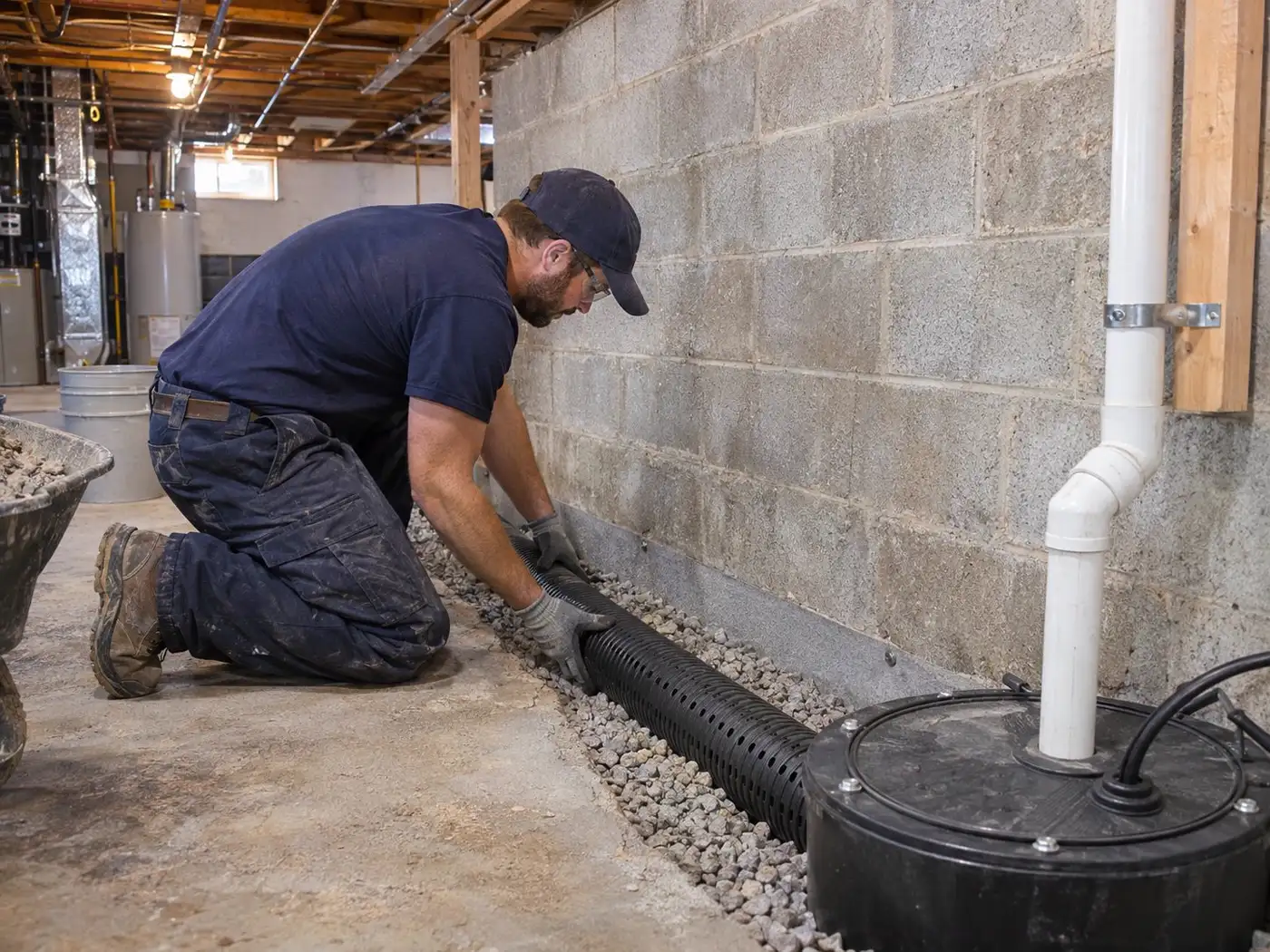
An interior system runs a perforated pipe in a trench along the inside of the footing, just below the slab. Water that seeps through the wall or rises at the joint between the wall and the floor flows into that pipe instead of across the floor. The pipe carries it to a sump basin, where a pump sends it outside and away from the house. This approach works from inside, so it can be done in winter and avoids digging up landscaping.
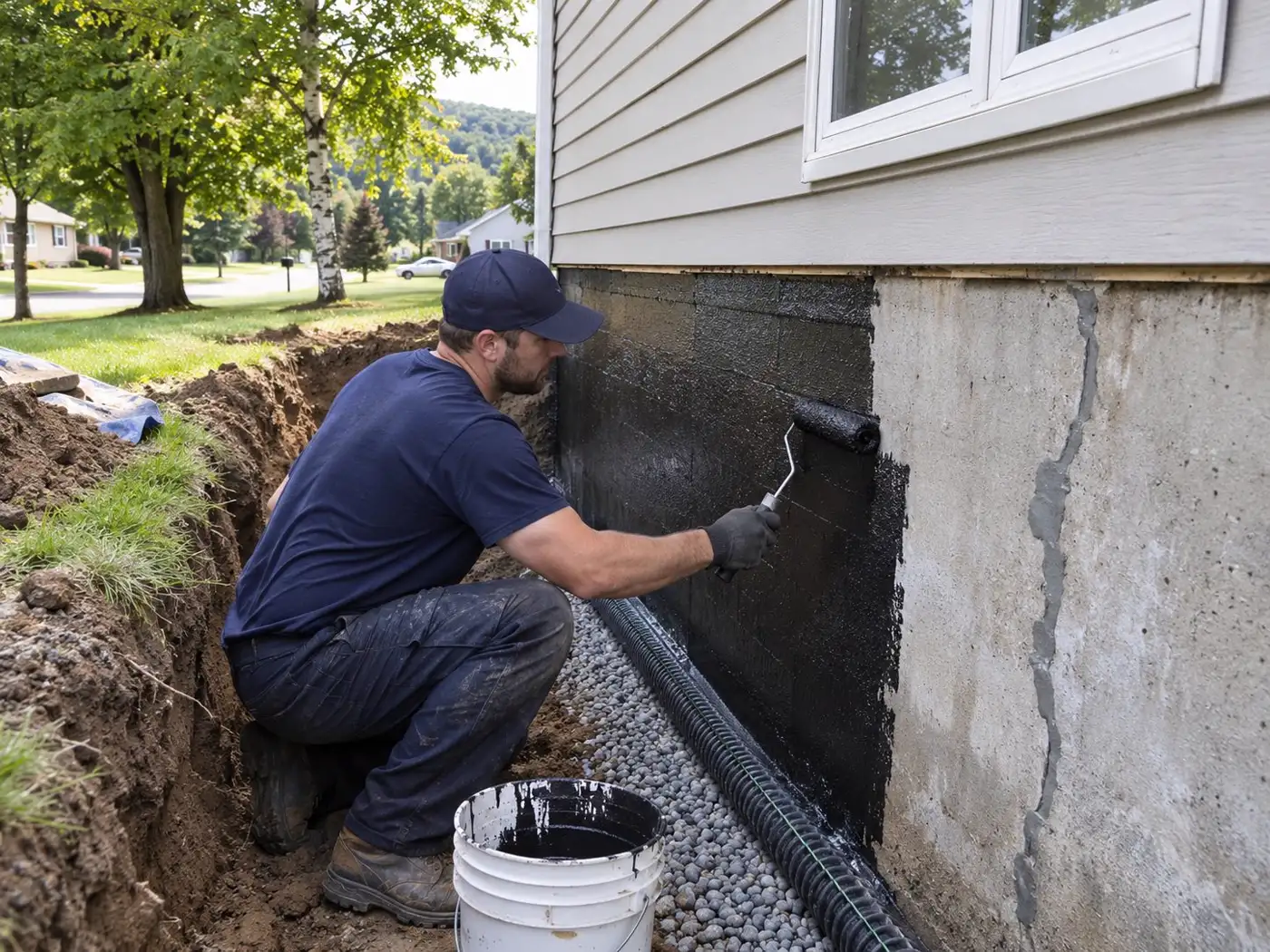
Exterior work means excavating along the outside of the foundation, cleaning the wall, and applying a waterproof membrane, often with a drainage board and a footing drain. It stops water at the source. It is a bigger project, and it is usually chosen when the outside of the wall needs repair anyway or when interior space must stay untouched.
A single leaking crack in a poured wall can often be sealed by injecting material into it from the inside. Injection fills the crack through the full thickness of the wall, which is different from smearing a patch over the surface.
When a wall bows inward or shows a long horizontal crack, keeping water out is not enough. Anchors, braces, or reinforcing straps may be used to hold the wall and, in some cases, gradually bring it back toward plumb.
Crawl spaces are handled with a heavy liner over the ground and walls, sealed vents, and moisture control, so damp air stops rising into the rooms above.
Basements rarely go from dry to flooded overnight. Most give warning signs for months or years first. Catching them early usually means a smaller, simpler repair.
The line where the basement wall meets the floor is called the cove joint. It is the most common place for groundwater to show up. Damp edges after a heavy rain or during the spring thaw point to water pressure building under and around the slab.
That powdery white crust is efflorescence. It is left behind when water moves through concrete or block and then evaporates, leaving minerals on the surface. Even if the wall feels dry today, efflorescence shows that water has been passing through it.
A basement that smells stale, makes stored boxes soft, or keeps a dehumidifier running nonstop often has a moisture problem in the walls or floor. Mold and mildew need very little water to grow, and that air can drift upstairs into the living space.
Thin vertical cracks in poured walls are common and are not always serious. Watch for cracks that leak, widen, or run sideways. Stair-step cracks in block walls and long horizontal cracks can mean soil pressure is pushing on the foundation. Tape a dated pencil mark at the end of a crack to see if it grows.
Paint that bubbles off the wall, rust on the bottom of appliances or metal shelving, and soft wood on stair stringers or framing all suggest water has been present for a while. Carpet that smells or feels damp is another clue.
If your pump cycles all spring, it is working hard to keep up. If it hums but does not move water, or you hear nothing during a storm, it may be failing at the worst possible time.
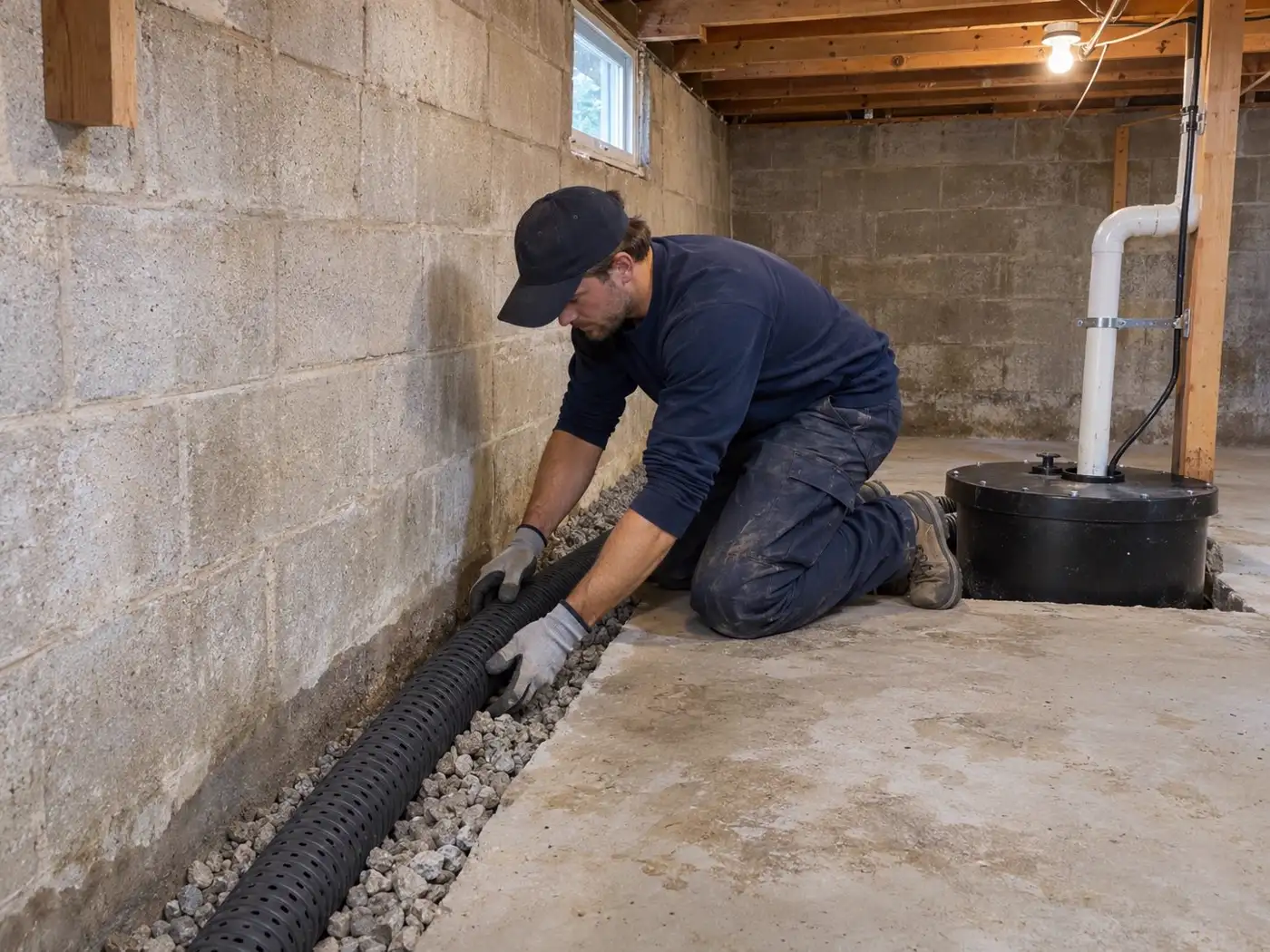
Basements in and around Eau Claire face a specific mix of conditions. Understanding them explains why water shows up when it does, and why some homes on the same street stay dry while others do not.
Eau Claire grew where the Eau Claire River meets the Chippewa River, and many neighborhoods sit on low ground near the water or near Half Moon Lake. In those areas the water table can rise close to basement floors in wet seasons. When groundwater climbs above the bottom of the foundation, it pushes up and in. That push is called hydrostatic pressure, and it is why water can come through the floor joint even when the walls look solid.
Much of the valley sits on sand and gravel left behind by glaciers. Sandy soil drains quickly, which helps, but it also lets water reach a foundation fast after a storm. Other lots have layers of heavier soil or clay that hold water against the wall for days. Two houses a few blocks apart can behave very differently.
Wisconsin winters drive frost several feet into the ground. Frozen soil expands and can press against foundation walls, especially block walls. Then, in March and April, deep snowpack melts while the ground below is still partly frozen. Meltwater cannot soak in normally, so it runs toward the lowest point it can find, which is often a basement. This is the season when many homeowners first discover a problem.
Older neighborhoods have many homes built with concrete block or even stone foundations. Block walls have hollow cores that can fill with water, and the mortar joints are a natural path for seepage. Newer homes usually have poured walls and footing drains, but those drains can clog or were sometimes installed without a good outlet.
Long winters are hard on gutters, and settled soil next to the house can slope the wrong way. A downspout that dumps water right against the foundation can undo the best interior system. We always look at the outside of the home as part of the inspection.
Every basement is different, so the cost of waterproofing depends on what the inspection finds. We do not quote numbers before seeing the home, because a guess can be far off in either direction. Here are the factors that move a project up or down.
A leak from one crack is a very different job from groundwater rising along the whole floor. Surface water from a bad downspout may need only an outside fix. Hydrostatic pressure from a high water table usually needs a drainage system. Finding the true cause first keeps you from paying for the wrong repair.
Interior drain tile is usually measured along the length of the wall that needs it. Some homes need only one or two walls done. Others need the full perimeter. The size of the basement and the number of corners and jogs all play a part.
Exterior waterproofing means excavation, and the depth of the foundation, the distance to the property line, and obstacles like decks, driveways, steps, and mature landscaping all affect the effort. Interior work avoids digging outside but may require moving belongings and breaking out a strip of the slab.
If the basement has drywall, framing, carpet, or built-in cabinets along the affected walls, those may need to come out so the crew can reach the foundation. Some homeowners plan waterproofing and finishing together so the work is done in the right order.
Bowing walls, displaced blocks, or long horizontal cracks add structural work to the plan. The amount of movement decides whether anchors, braces, or straps may work, or whether part of a wall may need rebuilding.
A new sump pit, a backup pump, an alarm, and a discharge line that will not freeze in January all add to the scope. An existing pump in good shape may be reused.
Tight crawl spaces, low ceilings, and limited room to move equipment can add time. Some projects, especially exterior excavation and structural repair, may require a permit from the local building department. A complete written proposal should spell out each of these items so you can compare options fairly.
Waterproofing is a big decision, and you will likely hear different opinions from different contractors. These steps help you sort through them and pick a company you can trust with your home.
A good contractor should be able to tell you where the water is coming from and why, in plain words. Be cautious if every visit ends with the same full-perimeter system no matter what the basement looks like. Sometimes the right answer is a crack injection or a downspout extension, and an honest company will say so.
The proposal should list what will be installed, how many feet of wall are included, where the sump pit and discharge line will go, what happens to the removed concrete, and how the floor will be finished afterward. It should also say who is responsible for moving belongings and for any finished walls that must come out. Vague estimates make it hard to compare companies.
Ask whether the work needs a permit in your town and who will pull it. Ask for proof of insurance before anyone starts digging or breaking concrete. These are normal questions, and a professional company will not mind them.
Waterproofing warranties vary a lot. Read what is covered, whether it transfers to a new owner if you sell, and what you are expected to do to keep it valid. Get it on paper, not just as a promise in conversation.
A same-day discount that disappears tomorrow is a sales tool, not a reason to sign. Water problems can be urgent, but you still have time to get a second opinion in most cases. Real emergencies, like a failed sump pump during a storm, should be handled right away, and the long-term fix can follow.
Companies that work in the Chippewa Valley understand spring thaw, sandy soil, high groundwater near the rivers, and the older block foundations common in established neighborhoods. That local knowledge helps them design a system that fits how water actually moves around your house.
It is easy to put off a damp basement, especially if the water shows up only a few weeks each spring. But moisture problems tend to grow quietly between those wet weeks.
Water that seeps through a crack carries fine soil with it and can slowly widen the opening. In winter, water trapped in a crack freezes and expands, pushing it wider. A crack that could have been sealed with a simple injection may later sit beside a wall that has started to bow. Fixing the water early often keeps the repair smaller.
Damp basements and crawl spaces feed mold and mildew. Air from the lower level rises through the house, so a musty basement can affect the whole home. Controlling moisture is one of the most effective ways to improve indoor air in older houses.
Many families use the basement for storage, laundry, a family room, or a bedroom. One heavy storm can ruin carpet, drywall, furniture, and keepsakes. A dry basement gives you real usable space instead of a room you worry about every time it rains.
Buyers and inspectors look closely at basements. Water stains, efflorescence, and cracks raise questions during a sale. Records of a properly designed waterproofing system and any transferable warranty can make that conversation easier.
We help homeowners throughout the Chippewa Valley. That includes Eau Claire, from the older streets near downtown and the university to newer subdivisions on the edges of the city. It also includes Altoona, Fall Creek, Chippewa Falls, Menomonie, Lake Hallie, Elk Mound, and Colfax. Each community has its own mix of housing ages, soil, and drainage, and we plan every project around the home in front of us.
If you have noticed water, cracks, or a musty smell, the best time to look into it is before the next big thaw or summer storm. Tell us what you are seeing and we will help you understand your options.
In March and April, deep snow melts while the ground below is still partly frozen. Meltwater cannot soak in, so it runs toward the foundation and the water table rises. That extra pressure pushes water through cracks and the floor joint for a few weeks each year.
Often, yes. Interior drain tile and a sump pump can manage water that comes through walls or rises at the floor joint, without digging up the yard. Exterior waterproofing is still the better choice for some homes, and we explain the difference during the inspection.
Not always. Thin vertical cracks in poured walls are common and can usually be sealed if they leak. Horizontal cracks, stair-step cracks in block walls, or walls that lean inward deserve a closer look because they can signal soil pressure on the foundation.
It depends on the home. Houses near rivers or lakes, homes with a history of seepage, and basements with drain tile usually benefit from one. If you already have a pump, testing it before spring thaw is a smart habit.
Tell us what is happening in your basement and we will help you understand the cause and your options.
Get a Free EstimateCall (715) 382-9861
Free — no obligation